RFID Laundry Management System – UHF RFID Laundry Tracking Solution
Need to track other assets too? See RFID asset management software →
BSD InfoTech provides UHF RFID-based laundry and garment tracking solutions for hospitals, universities, institutional laundries and dry-cleaning businesses. Our RFID Laundry Management System is not just a set of laundry tags: it combines washable UHF RFID tags, RFID readers and handheld devices with RFID software for inventory management, movement tracking, issue and return workflows, washerman lot management, exception handling and reporting — customized around your business process.
RFID tags alone are not the complete system. The value comes from the workflow software around them: who was issued what, what is with the washerman, what came back, and what is missing. BSD InfoTech has developed customized RFID/UHF laundry applications for hospital, university and dry-cleaning use cases.
Why RFID Laundry Management
Laundry operations in hospitals, campuses and commercial laundries usually depend on manual counting and paper registers. An RFID laundry management system gives every tagged item an identity, so the operation can address problems such as these:
| Operational problem | What an RFID laundry management system can provide |
| Manual counting | Items are counted by scanning their RFID tags instead of counting by hand. |
| Tracking large quantities of linen / garments | Each tagged item has its own RFID identity and record. |
| Reconciling issued and returned items | Expected items are compared with scanned items for each issue and each returned lot. |
| Missing items | Expected items that are not scanned at receiving are flagged for review. |
| Department-wise accountability | Issue and return quantities are recorded department by department. |
| Washerman / vendor accountability | Goods are issued to a named washerman as a lot, with open, pending and overdue lots visible. |
| Laundry movement visibility | Movement history shows what was issued, received, tagged or discarded, and when. |
| Inventory visibility | Inventory can be viewed by category, status and location. |
| Lifecycle / wash tracking | Wash counts can be tracked against a configured limit for each category or item. |
| Identifying tagged items | Tags are identified by scanning, with RFID verification and search for a single item. |
The system records and reconciles what is scanned. It does not by itself prevent loss or guarantee any specific saving; results depend on your process and how consistently it is followed.
RFID Laundry Management for Hospitals
Hospital linen moves in a loop between the store, the departments and the washerman. The RFID Laundry Management System is built around that loop, so every step from clean inventory to the next issue is recorded:
The hospital issues a defined quantity of goods to a washerman, and at return the received goods are scanned and reconciled against what was expected. Accepted goods go back into clean inventory and can be issued to departments again.
Washerman Lot Management
This is not generic RFID tracking. Each batch of goods sent for washing is a lot, which creates accountability and reconciliation around that lot. For every lot, the system records:
- Washerman
- Lot number
- Category
- Expected quantity
- RFID scanned quantity
- Received quantity
- Missing quantity
- Unexpected quantity
- Duplicate RFID
- Pending quantity
- Lot status (for example open or closed)
Department-wise Linen Issue and Return
Clean linen can be issued to departments, and departments subsequently return dirty linen for washing. With Department-wise Linen Tracking and Linen Issue and Return Management, the system can maintain visibility of:
| Department | Category | Item | Issued qty | Returned qty | Pending qty | Current status / location |
| Department the goods were issued to | Linen category | Individual item or item type | Quantity issued | Quantity returned dirty | Issued less returned | Where the item is and its status |
A department issue report and item movement history support this view. The department structure and the level of detail are configured to the way your facility works.
RFID Washerman Lot Issue
Issuing goods to a washerman is a controlled, scan-based process. The workflow is:
- Select washerman – choose who the goods are being issued to.
- Create lot – a lot number is created for this issue.
- Select category – for example bed sheets, towels or uniforms.
- Define expected quantity – how many items the lot should contain.
- Scan RFID-tagged items – each item is read as it is added to the lot; duplicate scans are flagged.
- Review scanned quantity – compare the scanned count with the expected count and see anything not scanned.
- Confirm issue – the lot is issued to the washerman with its expected and scanned quantities on record.
The key idea is Expected vs Scanned: the expected quantity is declared up front and the scanned quantity is what the reader actually saw, so any difference is visible at the point of issue and stays on the lot record.
RFID Washerman Return and Receiving
When the washerman returns the goods, the system helps the receiving team match what came back against the lot that went out:
- Select washerman – choose who is returning goods.
- View open lots – see that washerman's open lots and how long they have been out.
- Select lot – pick the lot being received.
- Confirm expected quantity – the quantity issued for the lot is shown for confirmation.
- RFID scanning – scan the returned RFID items; received quantity is matched against the expected items as you scan, and missing, unexpected and duplicate tags are flagged.
- Receive summary – review expected, received, missing, unexpected, duplicate and short quantities and review the exceptions.
- Finalize and print – close the lot and print the receipt.
Because receiving is scan-based, the system can identify discrepancies while the goods are still being received, not after they have been put away. How each discrepancy is settled is a decision for your team (see exception management below).
RFID Laundry Exception Management
Every laundry lot has exceptions. The system provides dedicated handling for each type so that they are recorded and dealt with in a defined way:
Missing RFID
An expected item was not scanned during receiving. The operator can mark it missing, override or skip, depending on the process.
Unexpected RFID
An RFID tag was scanned but was not expected in the selected lot. It can be accepted, rejected or moved to the lot it belongs to.
Duplicate RFID
The same RFID tag was scanned more than once. It is flagged, logged and skipped so it is not counted twice.
Damaged RFID
The tag is unreadable or only partially readable. The item needs manual handling, and can be re-tagged.
Partial Receipt
The lot is closed with some expected items still unreturned. A shortage report shows what is outstanding.
Quality Failure
A returned item is damaged or unacceptable. It can be quarantined and flagged, for example for discard review.
These are operational exception workflows. RFID detects and records the exception; it does not resolve it automatically — an authorized person decides the action.
RFID Linen and Garment Inventory Management
Each physical item can be associated with a unique RFID identity. Where configured, the system can maintain for each item:
- RFID / EPC
- Item ID
- Category
- Location
- Status
- Wash count
- Last movement
- Issue history and receive history
- Lifecycle status
The system design includes inventory registration, RFID tag assignment, bulk RFID assignment, RFID verification, RFID search, movement history and lifecycle tracking, with inventory that can be viewed by category, status and location.
RFID Tag Assignment and Verification
RFID tags are mapped to physical inventory items when the inventory is registered. Where applicable, the system supports:
- Single tag assignment – scan a tag and assign it to an item.
- Bulk RFID assignment – scan many tags in one session, with duplicates flagged.
- RFID verification – scan a tag to confirm the item, category, status and wash count it is mapped to.
- RFID search – look up an item by scanning its tag or entering its tag ID or item ID.
For tag models, attachment methods and washing specifications, see our UHF RFID Laundry and Garment Tags page.
Laundry Item Lifecycle Tracking
Where configured, the solution can maintain wash-count and lifecycle information for each item, so linen is reviewed for retirement based on use rather than guesswork:
The wash-count limit is set per category or item and can be different for each customer; no fixed number of washes applies to every implementation. Warnings can be raised as an item approaches its limit, and discarded items are recorded with a reason.
Hospital Use Case: Linen Accountability Example
A hospital laundry workflow typically involves items such as bed sheets, pillow covers, towels, scrubs, uniforms and other institutional linen (shown here as examples of what the system can be configured for). In such a setup the RFID Laundry Management System supports:
- Linen accountability – every tagged item has a record
- Department visibility – issued, returned and pending by department
- Washerman accountability – open lots and pending items per washerman
- Return reconciliation – expected vs received for every lot
- Missing item identification – expected items not scanned at receiving
- Inventory visibility – by category, status and location
- Lifecycle tracking – wash count against a configured limit
RFID Laundry Management for Universities and Hostels
BSD InfoTech has developed an RFID-based laundry application for a university use case. The same platform can be configured for university and campus environments, and typical use cases include:
- Hostel linen: bedsheets, pillow covers, towels, blankets
- Uniforms
- Hostel-wise inventory
- Issue and return of linen
- Laundry / vendor tracking
- Missing item tracking
- Lifecycle tracking
The university laundry application developed by BSD InfoTech covers the laundry-desk side of a campus operation. Its capabilities include identifying students and staff by university card tap, separate handling for students, staff and walk-in guests, registering each bag with its items, a bag status board (received, processing, ready, collected), email notifications, item-by-item verification at handover, billing and receipts for guests, cash closing, reports, and role-based access with an audit log.
Not every capability listed under typical use cases is part of every deployment; the scope is configured for each campus. The university is not named here.
RFID Solution for Dry Cleaning and Garment Tracking
BSD InfoTech has also developed an RFID/UHF application for a dry-cleaning shop. For dry cleaners and garment businesses, an RFID solution can be configured to support, at a capability level:
- Garment identification – each garment identified by its RFID tag
- RFID-based tracking and garment movement through the shop
- Order association – garments linked to a customer order
- Processing status – where each garment is in the process
- Ready and delivery tracking
- Billing integration where supported
The exact workflow, statuses and billing integration are defined with each business. For a lighter set-up, see the standalone solution below.
Standalone UHF RFID Billing and Garment Tracking Solution
For businesses that do not need the complete institutional laundry management platform
BSD InfoTech can also provide a standalone UHF RFID billing and garment tracking solution for dry cleaners, commercial laundries, garment businesses, laundry counters, and small and medium laundry operations.
The solution can combine:
- UHF RFID tags
- A handheld UHF RFID reader
- RFID application / software
- Billing workflow or integration where required
Handheld UHF RFID enables identification of multiple tagged garments or items in one operation, without scanning each one individually with a barcode scanner. It is a configurable standalone solution, sized to your counter or operation.
RFID Hardware for Laundry Applications
The software works with the RFID hardware that suits your operation. BSD InfoTech supplies the hardware layer as well:
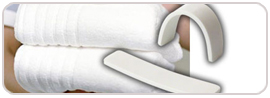
- Washable UHF RFID laundry / garment tags – see UHF RFID Laundry and Garment Tags and UHF RFID labels and inlays.
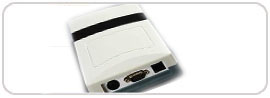
- UHF RFID readers – desktop UHF reader (Reader 107), fixed UHF reader (Reader 85), integrated fixed UHF reader (Reader 88).
- Handheld devices – see handheld terminals and portable data terminals; handheld UHF RFID readers are selected per project.
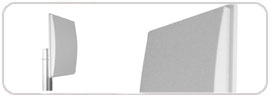
- RFID antennas and portal-style readers where applicable – see the 4-port UHF fixed reader.
Complete specifications are on the linked product pages.
Handheld and Offline-capable Operation
The system design includes handheld operation for the people doing the scanning:
- Handheld RFID operations – RFID scanning at issue, receiving and tag assignment
- Mobile-friendly workflows – screens laid out for handheld devices
- Offline-capable operation and synchronization – work can continue without a connection and be synchronized to the server, with sync status visible
- Configuration – RFID reader pairing, scan settings, alerts (for example overdue lots, missing items and wash-limit warnings) and multi-role access
The handheld hardware model is selected per project.
RFID Laundry Reports
Reporting capabilities in the solution design include the following reports, which can be configured for your operation and exported or printed:
- Inventory Summary
- Category-wise Inventory
- Item-wise Inventory
- RFID Tag Status
- Open Laundry Lots
- Closed Laundry Lots
- Washerman Pending
- Missing Items
- Lost RFID
- Discard Report
- Daily Laundry Movement
- Laundry Turnaround Time
- Wash Cycle Count
- Department Issue Report
- Item Lifecycle Report
These are available or configurable reporting capabilities; not every customer receives all fifteen reports by default.
RFID Laundry Solutions Developed by BSD InfoTech
BSD InfoTech has developed customized RFID/UHF applications for:
Hospital laundry operations
Hospital linen workflow including department issue and return and washerman lot management.
University / institutional laundry operations
Campus laundry desk workflow for students, staff and guests.
Dry-cleaning operations
Garment identification and tracking for a dry-cleaning shop.
Customer names and project details are not published on this page. We are happy to discuss relevant experience during a requirement discussion.
Frequently Asked Questions
Discuss Your RFID Laundry Requirement
Whether you operate a hospital, university, institutional laundry, commercial laundry or dry-cleaning business, BSD InfoTech can design an RFID/UHF-based workflow around your operational requirements.
- © 2005–2026 BSD Infotech Pvt. Ltd. All Rights Reserved
- Designed & Developed By BSD InfoTech Pvt. Ltd.