Biometric Authentication & Fingerprint Software Solutions
BSD Infotech develops fingerprint and biometric software solutions for authentication, attendance, access control, payment authorization and member verification. Solutions can be designed around fingerprint devices, turnstile gates and face recognition technology according to the application requirement.
Hardware + Software + Business Application
A fingerprint device is only the input. The value comes from what happens next — BSD's application authenticates the person, applies your business rule, and triggers the right action.
Fingerprint Device → Biometric Authentication → BSD Application → Business Rule → Action (attendance recorded / payment authenticated / gate opened / facility access granted / member verified)
Biometric Software Built Around Real Business Applications
Fingerprint authentication is not useful merely because a fingerprint can be captured. The real value comes from connecting biometric identification to a business process. BSD Infotech develops applications where biometric authentication can be connected to attendance, payments, access control, turnstiles, membership, facility access, institutional systems and other customized business applications.
Biometric Solutions for Different Business Requirements
Fingerprint Authentication for Payments
A person authenticates themselves with a fingerprint before a payment is authorized within a business application.
Person → Fingerprint Capture → Identity Authentication → Payment Authorization → Transaction
This ties a transaction to a verified individual instead of just a card or PIN that anyone holding it could use. This is authentication for a payment/business application — BSD does not operate a banking or payment network.
Employee Attendance Using Fingerprint Authentication
An employee enrolls their fingerprint once; each later scan is matched against that stored template before attendance is recorded.
Employee → Fingerprint Device → PC-Based Application → Identity Verification → Attendance Recorded
BSD has built this enrollment-plus-authentication workflow for field workforce identity verification, aimed at preventing impersonation and "ghost worker" attendance, with real-world use in public distribution systems (PDS), examination centers (confirming the same person sat the exam) and attendance for remote/field employees.
Centralized Fingerprint Access Control for Multiple Gates
BSD has developed a customized solution for an institution with around 10-12 gates, each fitted with a fingerprint device and a turnstile. A centralized application manages which person is permitted through which gate or group of gates.
             CENTRALIZED
         BIOMETRIC APPLICATION
                   |
    --------------------------------
    |       |       |       |      |
  Gate 1  Gate 2  Gate 3  ...   Gate 12
    |       |       |             |
        Fingerprint Devices
                |
          Turnstile Gates
Person → Fingerprint → Identity Verification → Centralized Permission Check → Gate Authorization → Turnstile Opens / Remains Locked
Access permissions are managed centrally, subject to the actual system implementation. This is an example of a customized solution BSD has developed — not every BSD fingerprint installation automatically supports 12 gates.
Fingerprint Member Authentication for Clubs & Societies
At several leading clubs in India, members verify their identity with a fingerprint at reception or a self-service kiosk when they arrive. Only after that fingerprint check does the system allow them to use any point-of-sale outlet in the club — food & beverage, pro shop, spa or any other counter — so club spending is always tied to a verified member.
Member → Fingerprint Authentication → Member Verification → Payment / Eligibility Check → Access Decision → Facility Access
This same approach — connecting fingerprint authentication to a membership or eligibility rule before allowing facility access — applies to housing societies, clubs, recreation facilities and other membership organizations. See our Club Management Software for the fuller club-side membership module.
What Can BSD Build With Biometric Authentication?
Payment Authentication
Fingerprint authentication connected to payment workflows.
Employee Attendance
Fingerprint-based employee identification and attendance.
Multi-Gate Access Control
Centralized access permissions across multiple biometric gates.
Member Authentication
Fingerprint-based member verification and facility access.
Face Recognition
Camera-based authentication where appropriate, such as BSD's FL1000 smart lock.
Customized Applications
Integration of biometric devices with your existing business application.
Fingerprint or Face Recognition — Choose the Right Authentication Method
Fingerprint authentication uses a fingerprint device and suits controlled physical authentication points, and can be integrated into attendance, access, payment or member workflows. Face recognition uses a camera, can provide contactless authentication, and can be used where camera-based authentication is more appropriate — BSD's FL1000 smart lock supports face recognition alongside password, card and mechanical key unlocking.
The appropriate authentication method depends on the environment, infrastructure, user experience and application requirement — neither technology is universally better.
| Fingerprint | Face Recognition | |
| Authentication | Fingerprint | Face |
| Hardware | Fingerprint device | Camera |
| Contactless | No | Yes |
| Typical use | Controlled authentication point | Camera-based authentication |
| Integration | Application/device based | Camera/software based |
Fingerprint & Biometric Access Control Solutions
Biometric authentication and access control are two different things. The fingerprint device identifies and authenticates the person; the application then determines whether access is allowed according to configured rules — that's Authentication + Permission + Physical Access. Common use cases include institutional gates, turnstiles, restricted areas, member facilities, employee access and other controlled premises. BSD's card, biometric and NFC-based access control hardware, including Security Relay Box (SRB) door controllers, works alongside time attendance, visitor management and turnstile/barrier systems, so the same fingerprint can serve multiple purposes across your premises.
Biometric Turnstile Integration
A fingerprint device, an access control application and a turnstile work together: the fingerprint is captured, authenticated, checked against permissions, and the turnstile unlocks on a match or stays locked otherwise. BSD's turnstile-compatible access control range covers flap barriers, full-height turnstiles, boom barriers and swing barriers. Compatibility depends on the specific turnstile model, not every turnstile on the market.
Centralized Biometric Management
For the multi-gate use case above, a central application manages users, biometric identities, gate permissions, access rules and authentication events, with reporting on top. Some of this is standard to the application; more specific rules and reports are configurable or custom-developed for the installation.
Complete Fingerprint & Biometric Solutions
Software
- Fingerprint applications
- Biometric authentication
- Attendance
- Access control
- Customized applications
Hardware
- Digital Persona fingerprint scanners
- SecuGen Hamster Plus
- Mantra MFS 100
- Morpho 1300e fingerprint scanner
- Futronic FS88
- Turnstile integration via access control hardware
Fingerprint SDK & Custom Biometric Integration
BSD can integrate supported biometric devices into customized software applications — existing business software, attendance applications, access-control systems, payment applications and membership systems. Talk to us about Customized Software Development or Product Customization for your specific integration.
Customized Biometric Software Development
If you have a specific biometric workflow, BSD can develop or customize an application around the required business process, subject to technical feasibility — the same fingerprint → identify person → apply business rule → perform required action pattern used in the payment, attendance, multi-gate and membership examples above.
Industries & Organizations That Can Use Biometric Solutions
- Corporate offices — network/workstation access and employee attendance
- Educational institutions — campus entry, attendance and examination-center identity verification
- Clubs and housing societies — member verification and facility access
- Healthcare facilities — staff verification and registration
- Government / institutional projects — public distribution systems (PDS) and civil enrolment
- Other controlled-access environments
Real-World Biometric Solution Experience
BSD's biometric implementations span fingerprint-based employee verification for field workforces (including public distribution systems and examination centers), staff registration and verification at a healthcare/diagnostic facility, member authentication tied to point-of-sale access at clubs, and a centralized fingerprint access control system across roughly 10-12 gates at an institution.
See BSD Biometric Software in Action
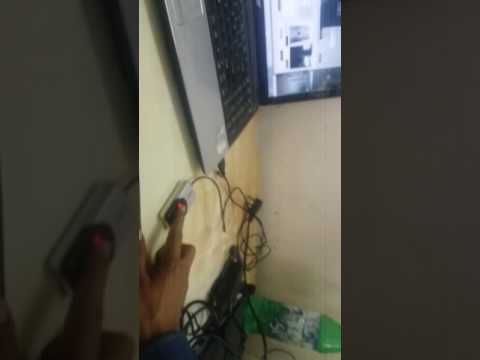
Employee Verification With Biometric Device
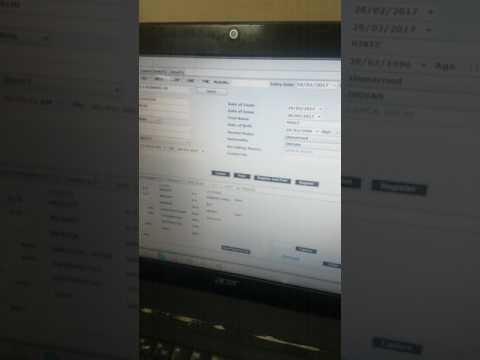
Employee Registration With Picture and Biometric
DMIT Software
Separately from authentication and access control, BSD also works with DMIT (Dermatoglyphics Multiple Intelligence Test) software, which studies fingerprint patterns in relation to an individual's multiple intelligences, such as reasoning, problem-solving and the ability to perceive relationships between things. This is a distinct application from the security/authentication use cases above.
Frequently Asked Questions
Need a Biometric Solution for Your Business?
Whether you need fingerprint attendance, payment authentication, centralized gate access, member verification or a customized biometric application, talk to BSD Infotech about your requirement.
Discuss Your Biometric Requirement
Tell us what you need to authenticate, control or automate. Our team can help evaluate the appropriate fingerprint, biometric or face-recognition approach.
- © 2005–2026 BSD Infotech Pvt. Ltd. All Rights Reserved
- Designed & Developed By BSD InfoTech Pvt. Ltd.