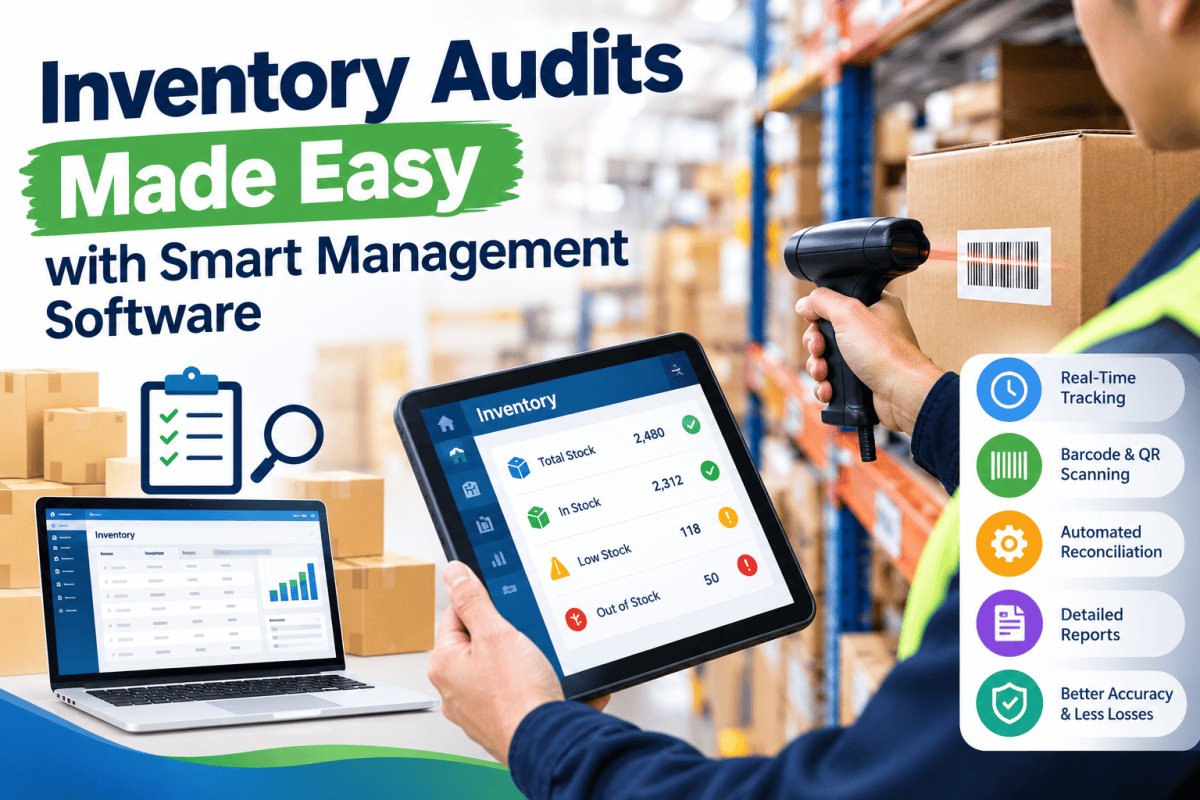
How Inventory Automation Improves Procurement Planning
Contents
- What Is Inventory Automation?
- 1. Provides Real-Time Inventory Visibility
- 2. Improves Demand Forecasting
- 3. Automates Reorder Point Management
- 4. Reduces Overstocking and Stockouts
- 5. Helps Procurement Teams Plan Purchases Earlier
- 6. Improves Supplier Management
- 7. Supports Better Purchase Order Management
- 8. Reduces Manual Errors
- 9. Improves Cash Flow Management
- 10. Enables Data-Driven Procurement Decisions
- 11. Makes Procurement More Scalable
- 12. Creates a Proactive Procurement Strategy
- Best Practices for Implementing Inventory Automation
- Conclusion
In today’s fast-moving business environment, procurement teams need more than spreadsheets and manual stock checks to manage purchasing effectively. Inventory automation connects stock levels, demand patterns, purchasing data, and supplier information to help businesses make faster and more informed procurement decisions.
Modern inventory systems can monitor stock in real time, identify replenishment requirements, and use historical consumption and demand patterns to support better purchasing decisions. This helps organizations move from reactive procurement to proactive planning.
What Is Inventory Automation?
Inventory automation refers to the use of software, real-time data, analytics, and automated workflows to manage inventory activities with less manual intervention.
Instead of employees regularly checking spreadsheets or physically reviewing stock levels, an automated inventory system can track:
- Current stock levels
- Product movement and consumption
- Reorder points
- Safety stock
- Purchase requirements
- Supplier lead times
- Historical purchasing patterns
- Slow-moving and fast-moving products
When inventory data is connected with procurement processes, purchasing teams can identify what needs to be ordered, when it should be ordered, and how much should be purchased.
1. Provides Real-Time Inventory Visibility
One of the biggest advantages of inventory automation is real-time visibility into stock levels.
Manual inventory tracking can result in outdated information, especially when multiple departments, warehouses, or locations are involved. Automated systems continuously update inventory information as products are received, issued, sold, or transferred.
This allows procurement teams to identify potential shortages before they affect operations. Real-time inventory tracking is also a key capability of modern inventory-planning systems.
2. Improves Demand Forecasting
Effective procurement planning depends heavily on understanding future demand.
Inventory automation can analyze historical sales, consumption patterns, seasonal trends, and other available data to support demand forecasting. AI and machine-learning technologies can further improve forecasting by identifying patterns that may be difficult to detect manually.
For example, if a business consistently experiences higher demand for a particular product before a seasonal event, the system can help procurement teams prepare inventory in advance rather than waiting until stock becomes critically low.
3. Automates Reorder Point Management
A reorder point defines when new inventory should be purchased.
With automation, businesses can establish reorder thresholds based on factors such as:
- Average demand
- Supplier lead time
- Safety stock
- Demand variability
- Desired service levels
When inventory reaches the defined threshold, the system can generate an alert or initiate a replenishment workflow. This reduces the risk of employees forgetting to reorder essential products.
4. Reduces Overstocking and Stockouts
Procurement teams often face two opposite challenges: ordering too much or ordering too little.
Excess inventory increases storage and carrying costs and can tie up working capital. On the other hand, insufficient inventory can cause stockouts, operational delays, and lost sales.
Inventory automation helps maintain a better balance by using demand information and inventory targets to determine appropriate stock levels.
5. Helps Procurement Teams Plan Purchases Earlier
Manual procurement often starts when someone notices that inventory is running low. This creates a reactive purchasing process.
Automation changes this approach by identifying future requirements earlier. Procurement teams can review upcoming purchase needs based on expected consumption, existing inventory, supplier lead times, and planned business activities.
This gives buyers more time to compare suppliers, negotiate prices, and organize deliveries instead of relying on emergency purchases.
6. Improves Supplier Management
Procurement planning is not only about knowing what to purchase. Businesses also need to understand supplier performance.
Automated systems can help maintain supplier information and track factors such as:
- Purchase history
- Delivery performance
- Lead times
- Pricing
- Order quantities
- Supplier reliability
Better visibility can support stronger supplier relationships and more informed sourcing decisions. Procurement automation can also improve supplier management, purchasing workflows, and supplier-performance visibility.
7. Supports Better Purchase Order Management
Inventory automation can connect inventory requirements with purchasing workflows.
When a replenishment requirement is identified, the system can help create or initiate a purchase request or purchase order according to predefined rules and approval processes.
This can reduce manual data entry, minimize errors, and speed up the procurement cycle. Automated procurement workflows are designed to reduce bottlenecks and improve order processing efficiency.
8. Reduces Manual Errors
Spreadsheets and manually maintained inventory records can contain errors caused by incorrect data entry, missed updates, duplicate records, or outdated information.
Automation reduces repetitive manual work by synchronizing inventory and procurement data. This gives purchasing teams more reliable information when making decisions.
The result is a procurement process based more on current data and less on assumptions.
9. Improves Cash Flow Management
Inventory represents a significant investment for many businesses.
When too much money is tied up in slow-moving inventory, businesses have less working capital available for other activities. Inventory planning helps organizations determine how much stock is actually required and avoid unnecessary purchases.
By aligning procurement more closely with actual and expected demand, businesses can improve inventory utilization and manage cash more efficiently.
10. Enables Data-Driven Procurement Decisions
Automated inventory systems generate valuable information that procurement managers can use for decision-making.
Reports and dashboards can highlight:
- Fast-moving products
- Slow-moving products
- Stockout risks
- Overstocked items
- Reorder requirements
- Purchasing trends
- Supplier performance
- Inventory turnover
Instead of relying solely on experience or manual calculations, procurement teams can use these insights to make more strategic purchasing decisions.
11. Makes Procurement More Scalable
As a business grows, managing inventory manually becomes increasingly difficult.
More products, suppliers, warehouses, customers, and purchase orders create additional complexity. Automation allows businesses to manage larger volumes of inventory without increasing manual work at the same rate.
This makes automated inventory and procurement management especially useful for growing businesses that need greater operational efficiency.
12. Creates a Proactive Procurement Strategy
The biggest impact of inventory automation is the shift from reactive purchasing to proactive procurement planning.
Instead of asking:
“What do we need to buy today?”
procurement teams can focus on:
“What will we need next week or next month, and how can we purchase it at the right time and cost?”
This forward-looking approach can improve inventory availability, reduce unnecessary purchasing, and support better supplier coordination. Demand forecasting and inventory planning help connect future demand with procurement and inventory decisions.
Best Practices for Implementing Inventory Automation
Businesses can get better results from inventory automation by following a structured approach:
- Maintain accurate inventory data – Ensure product, stock, supplier, and transaction information is updated regularly.
- Define reorder points – Establish appropriate thresholds for different products.
- Use demand forecasting – Consider historical demand, seasonality, and upcoming business requirements.
- Monitor supplier lead times – Include supplier delivery times when planning replenishment.
- Set appropriate safety stock levels – Maintain enough buffer for demand and supply variability.
- Integrate procurement and inventory data – Ensure purchasing decisions are based on current inventory information.
- Monitor performance regularly – Track stockouts, excess inventory, purchasing costs, and supplier performance.
- Use automation for routine tasks – Allow employees to focus on strategic procurement instead of repetitive data entry.
Conclusion
Inventory automation is transforming procurement planning from a manual, reactive activity into a data-driven and proactive process. By providing real-time inventory visibility, improving demand forecasting, automating reorder points, and connecting inventory requirements with purchasing workflows, automation helps businesses make smarter procurement decisions.
The goal is not simply to automate purchasing. It is to ensure that the right products are available in the right quantities at the right time, while controlling inventory costs and improving operational efficiency.
For businesses looking to improve procurement performance, inventory automation can provide the visibility and intelligence needed to plan purchases more accurately and respond faster to changing demand.
FAQs
1. What is inventory automation?
Inventory automation uses software, real-time data, analytics, and automated workflows to manage stock levels and inventory-related processes with less manual intervention.
2. How does inventory automation improve procurement planning?
It provides real-time inventory information, supports demand forecasting, identifies reorder requirements, and helps procurement teams determine when and how much to purchase.
3. Can inventory automation prevent stockouts?
Yes. Automated reorder points and demand forecasting can help identify potential shortages earlier and trigger replenishment actions.
4. Does inventory automation reduce excess inventory?
It can help reduce excess inventory by aligning purchasing decisions with actual consumption, forecasted demand, safety stock requirements, and reorder levels.
5. How does automation help supplier management?
It provides visibility into supplier pricing, purchase history, lead times, and delivery performance, helping procurement teams make better sourcing decisions.
6. Is inventory automation suitable for small businesses?
Yes. Small and growing businesses can use automation to reduce manual inventory work, improve purchasing accuracy, and create scalable procurement processes.
7. What data is required for automated inventory planning?
Common data includes inventory levels, sales or consumption history, supplier information, lead times, purchase history, reorder points, and safety-stock requirements.
8. What is the difference between inventory automation and procurement automation?
Inventory automation primarily manages stock visibility, replenishment, and inventory-related activities, while procurement automation focuses on purchasing workflows such as requisitions, purchase orders, supplier management, and approvals. The two can work together as part of an integrated procurement strategy.
Need help with Inventory Management? BSD Infotech supplies the hardware, builds the software and integrates both.
Request a Quote