How Inventory Analytics Improve Business Decisions
Contents
In today’s competitive business environment, managing inventory efficiently is essential for maintaining profitability, reducing operational costs, and improving customer satisfaction. Businesses that rely only on manual stock records or basic inventory reports may struggle to understand demand patterns and identify potential stock issues.
Inventory analytics helps businesses turn inventory data into useful insights. By analyzing stock levels, sales trends, product movement, and purchasing patterns, companies can make faster and more informed business decisions.
What Is Inventory Analytics?
Inventory analytics is the process of collecting and analyzing inventory-related data to understand how products move through a business.
It can provide insights into:
- Current stock levels
- Fast-moving and slow-moving products
- Sales trends
- Stock turnover
- Overstock and understock situations
- Reorder requirements
- Product demand
- Inventory costs
These insights help businesses make decisions based on actual data rather than assumptions.
How Inventory Analytics Improves Business Decisions
1. Better Demand Forecasting
Inventory analytics helps businesses identify historical sales patterns and changing customer demand. By analyzing previous sales data, companies can estimate which products are likely to be in demand in the future.
Better demand forecasting helps businesses maintain the right amount of stock and prepare for seasonal or unexpected changes in demand.
2. Prevents Overstocking
Holding excessive inventory can increase storage costs and tie up working capital. Inventory analytics can identify products that are not selling as expected.
Businesses can use this information to reduce unnecessary purchasing, create promotional offers, or adjust their inventory strategy.
3. Reduces Stockouts
Running out of popular products can lead to missed sales and dissatisfied customers. Analytics can help identify products that are reaching critical stock levels.
Businesses can use reorder alerts and historical sales information to replenish inventory before products become unavailable.
4. Identifies Fast-Moving Products
Inventory analytics can show which products are selling quickly. This allows businesses to prioritize high-demand products and ensure sufficient stock is available.
For example, an electronics company may discover that certain smart card readers or biometric devices have significantly higher demand than other products. The company can then plan purchasing and inventory accordingly.
5. Improves Purchasing Decisions
Purchasing decisions become more accurate when they are supported by inventory data.
Businesses can analyze:
- Product sales history
- Current stock
- Supplier lead times
- Reorder levels
- Seasonal demand
- Product turnover
This helps purchasing teams determine what to order, when to order, and how much to order.
6. Improves Cash Flow Management
Inventory represents a significant investment for many businesses. Excess stock means that money remains tied up in products that may take a long time to sell.
Inventory analytics helps companies identify unnecessary inventory and allocate their working capital more efficiently.
7. Improves Warehouse Efficiency
Inventory data can also help businesses improve warehouse operations. By understanding product movement, companies can organize frequently sold products in easily accessible locations.
This can reduce picking time, improve order processing, and make warehouse operations more efficient.
8. Supports Data-Driven Business Planning
One of the biggest advantages of inventory analytics is that it provides reliable information for strategic planning.
Business managers can use inventory reports and dashboards to understand:
- Which products generate the most sales
- Which products are underperforming
- Which categories require more investment
- Where inventory costs can be reduced
- When additional stock may be required
This allows management to make decisions based on measurable business data.
Key Inventory Metrics Businesses Should Track
To make effective decisions, businesses should monitor important inventory metrics such as:
| Metric | Purpose |
|---|---|
| Inventory Turnover | Measures how quickly inventory is sold and replaced |
| Stockout Rate | Shows how often products become unavailable |
| Days of Inventory | Estimates how long current inventory may last |
| Sell-Through Rate | Measures the percentage of inventory sold |
| Carrying Cost | Tracks the cost of holding inventory |
| Reorder Point | Identifies when new stock should be ordered |
| Dead Stock | Identifies products with little or no sales activity |
The Role of Technology in Inventory Analytics
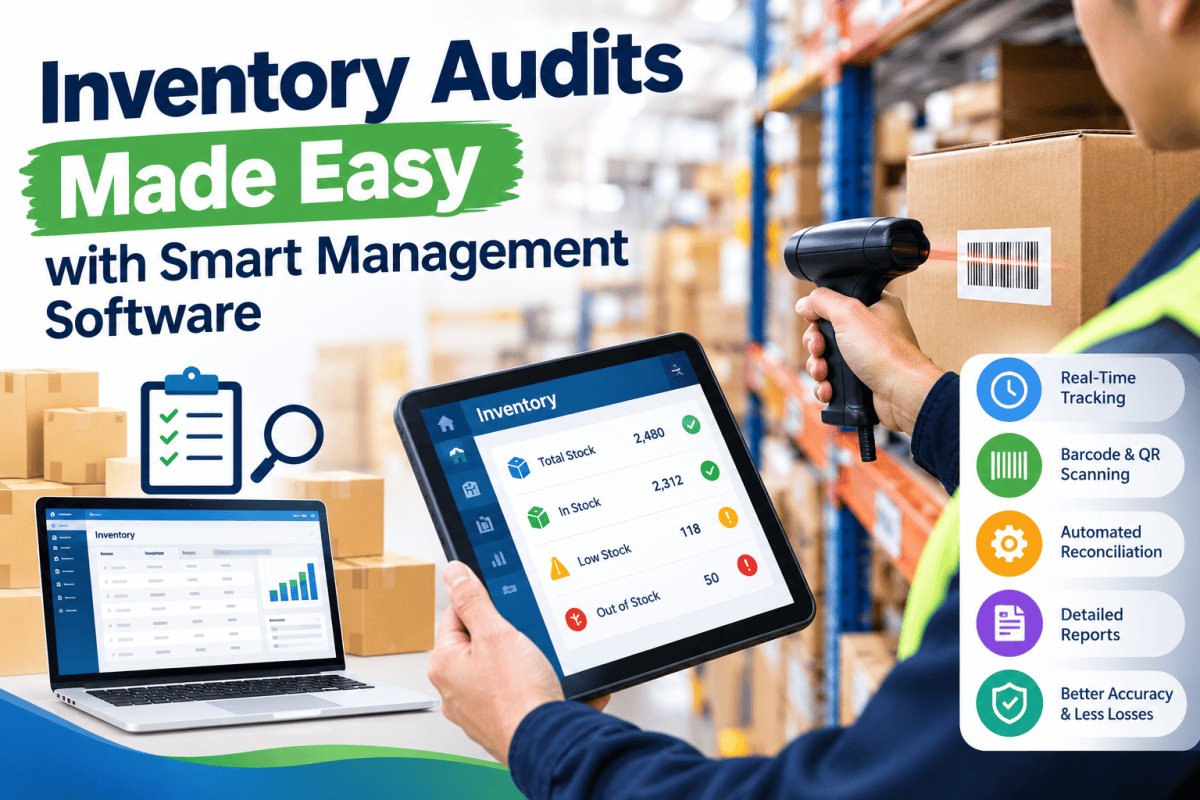
Modern inventory management systems can automatically collect and analyze inventory data. Businesses can integrate inventory systems with sales platforms, barcode scanners, RFID readers, POS systems, and e-commerce platforms.
Real-time dashboards can provide updated information about stock availability, product movement, and reorder requirements.
Automation also reduces the possibility of errors associated with manual inventory tracking.
Conclusion
Inventory analytics gives businesses a clearer understanding of their stock, sales, and customer demand. By analyzing inventory data, companies can reduce overstocking, prevent stockouts, improve purchasing decisions, manage cash flow, and increase operational efficiency.
In a data-driven business environment, inventory analytics is not just a reporting tool—it is an important part of better business decision-making. Businesses that use accurate inventory data can respond more effectively to market demand and build a more efficient and profitable operation.
Need help with Inventory Management? BSD Infotech supplies the hardware, builds the software and integrates both.
Request a Quote