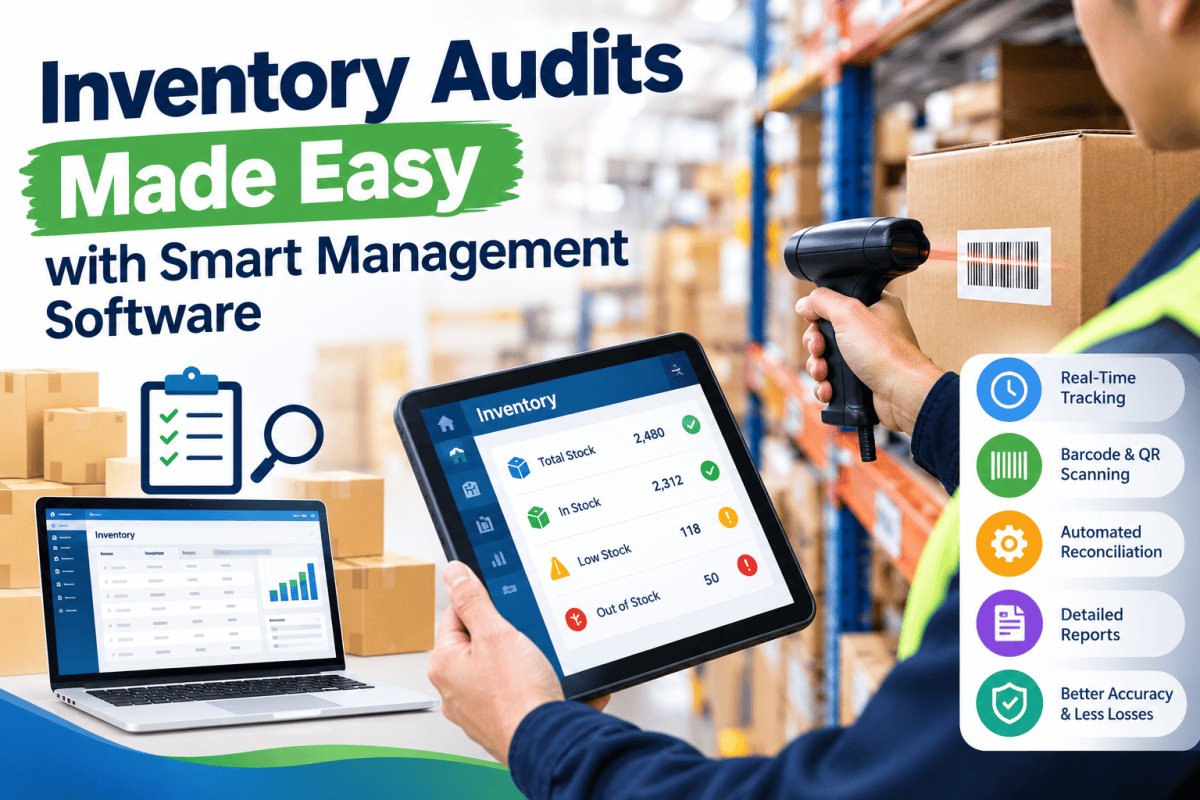
Asset Tracking vs Inventory Management: Understanding the Difference
Contents
- What is Asset Tracking?
- What is Inventory Management?
- Asset Tracking vs Inventory Management: Key Differences
- Asset Tracking Example
- Inventory Management Example
- Technologies Used
- Benefits of Asset Tracking
- Benefits of Inventory Management
- Can Businesses Use Both?
- Industries That Benefit
- Choosing the Right Solution
- Conclusion
- SEO FAQ
Managing business resources efficiently is essential for reducing costs, improving productivity, and maintaining operational control. However, many businesses confuse asset tracking with inventory management, even though they serve different purposes.
While both systems help organizations monitor valuable items, they are designed to solve different business challenges.
In this guide, we’ll explain the key differences between asset tracking and inventory management, when to use each, and how technologies like RFID, barcode, QR codes, and IoT simplify the entire process.
What is Asset Tracking?
Asset tracking is the process of monitoring the location, condition, ownership, and usage of fixed or movable business assets throughout their lifecycle.
Assets are items that a company owns and uses for daily operations rather than selling.
Examples of Business Assets
- Computers and laptops
- Servers
- Office furniture
- Machinery
- Medical equipment
- Vehicles
- Projectors
- Laboratory equipment
- RFID devices
- Security systems
The goal is to know:
- Where the asset is
- Who is using it
- Its maintenance history
- Warranty status
- Purchase value
- Depreciation
- Current condition
What is Inventory Management?
Inventory management focuses on tracking products that are meant to be sold or consumed during business operations.
Inventory continuously changes as items are purchased, manufactured, or sold.
Examples of Inventory
- Raw materials
- Finished products
- Spare parts
- Retail stock
- Warehouse goods
- Packaging materials
- Consumables
The primary objective is ensuring the right stock is available at the right time while avoiding overstocking or stock shortages.
Asset Tracking vs Inventory Management: Key Differences
| Feature | Asset Tracking | Inventory Management |
|---|---|---|
| Purpose | Track company-owned assets | Track products for sale or consumption |
| Lifecycle | Long-term | Short-term |
| Ownership | Business assets | Goods and stock |
| Quantity | Usually unique items | Multiple identical items |
| Tracking Method | RFID, Barcode, GPS, QR | Barcode, RFID, SKU |
| Focus | Usage, maintenance, location | Stock quantity and movement |
| Depreciation | Yes | No |
| Maintenance | Required | Usually not |
| Financial Value | Capital expenditure | Operational expenditure |
Asset Tracking Example
A hospital owns:
- 500 infusion pumps
- 120 wheelchairs
- 45 portable ultrasound machines
The hospital wants to know:
- Current location
- Assigned department
- Maintenance schedule
- Last service date
- Responsible staff member
This is asset tracking.
Inventory Management Example
A warehouse stores:
- 20,000 RFID cards
- 10,000 barcode labels
- 3,500 fingerprint scanners
- 8,000 NFC tags
The company needs to know:
- Current stock
- Incoming shipments
- Outgoing orders
- Reorder levels
- Supplier information
This is inventory management.
Technologies Used
Modern organizations often use automated technologies for both systems.
Barcode
- Low-cost
- Easy implementation
- Manual scanning
- Ideal for inventory
RFID
- No line-of-sight required
- Bulk scanning
- Faster operations
- Ideal for assets and warehouses
QR Codes
- Easy mobile scanning
- Cost-effective
- Suitable for offices and educational institutions
GPS
- Tracks moving assets
- Used for vehicles
- Real-time location updates
IoT Sensors
- Temperature monitoring
- Equipment health
- Predictive maintenance
- Remote monitoring
Benefits of Asset Tracking
Better Asset Visibility
Locate assets instantly across multiple locations.
Reduced Asset Loss
Prevent theft, misplacement, and unauthorized movement.
Improved Maintenance
Receive reminders for servicing and inspections.
Better Compliance
Maintain audit-ready asset records.
Increased Productivity
Employees spend less time searching for equipment.
Lower Operational Costs
Improve utilization while reducing unnecessary purchases.
Benefits of Inventory Management
Prevent Stockouts
Maintain optimal inventory levels.
Reduce Overstocking
Avoid tying up unnecessary capital.
Faster Order Fulfillment
Improve customer satisfaction.
Accurate Demand Forecasting
Analyze sales trends and purchasing patterns.
Better Warehouse Efficiency
Optimize storage space and inventory movement.
Can Businesses Use Both?
Absolutely.
Most medium and large organizations require both systems.
For example:
A manufacturing company tracks:
Assets
- CNC machines
- Forklifts
- Computers
- Production equipment
Inventory
- Raw materials
- Finished goods
- Spare parts
- Packaging materials
Using both systems together provides complete operational visibility.
Industries That Benefit
Manufacturing
Track machinery and warehouse inventory.
Healthcare
Monitor medical equipment and pharmaceutical stock.
Education
Manage computers, projectors, laboratory equipment, and stationery.
Retail
Track store assets alongside product inventory.
Hospitality
Monitor kitchen equipment, furniture, and consumables.
Logistics
Track fleet assets, containers, and warehouse inventory.
Choosing the Right Solution
Choose Asset Tracking if you need to:
- Monitor equipment
- Schedule maintenance
- Prevent asset loss
- Track employee-issued devices
- Maintain compliance records
Choose Inventory Management if you need to:
- Track stock levels
- Manage warehouses
- Process customer orders
- Forecast demand
- Optimize inventory costs
Many businesses benefit from integrating both systems into a single platform for complete visibility.
Conclusion
Although asset tracking and inventory management are closely related, they solve different operational challenges.
Asset tracking focuses on managing valuable company-owned equipment throughout its lifecycle, while inventory management ensures products and stock are available when needed.
With technologies such as RFID, barcodes, QR codes, GPS, and IoT, businesses can automate tracking, reduce errors, improve productivity, and make better operational decisions.
Choosing the right solution—or combining both—helps organizations gain greater control over resources, reduce costs, and support long-term business growth.
SEO FAQ
1. What is the difference between asset tracking and inventory management?
Asset tracking monitors long-term company-owned equipment, while inventory management tracks products that are sold or consumed.
2. Can RFID be used for both asset tracking and inventory management?
Yes. RFID technology is widely used for both applications because it enables fast, accurate, and contactless tracking.
3. Which industries benefit most from asset tracking?
Healthcare, education, manufacturing, logistics, retail, hospitality, and corporate offices all benefit from asset tracking systems.
4. Is inventory considered an asset?
From an accounting perspective, inventory is a current asset. Operationally, inventory management differs from fixed asset tracking because inventory is intended for sale or consumption.
5. Can one software manage both assets and inventory?
Yes. Modern enterprise solutions often combine asset tracking and inventory management into a unified platform for complete operational visibility.
Need help with Inventory Management? BSD Infotech supplies the hardware, builds the software and integrates both.
Request a Quote