Why Educational Institutions Need Smart Transport Management Systems
Contents
Student safety, operational efficiency, and effective communication are top priorities for educational institutions. Managing school and college transportation manually can lead to delays, route inefficiencies, communication gaps, and safety concerns. As educational institutions grow, traditional transport management methods become increasingly difficult to manage.
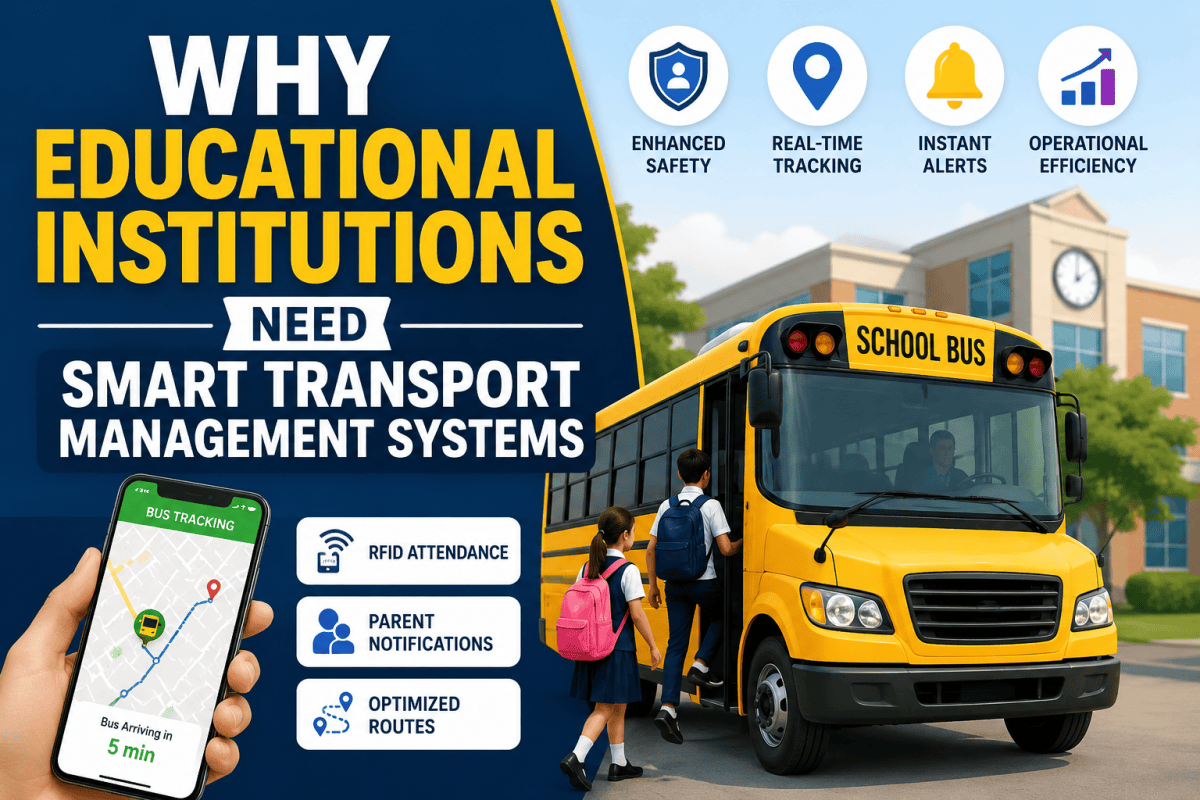
A Smart Transport Management System helps schools, colleges, and universities streamline transportation operations using technology such as GPS tracking, RFID attendance, route optimization, mobile applications, and real-time notifications. These solutions enhance student safety, improve fleet utilization, and provide peace of mind to parents and administrators.
What is a Smart Transport Management System?
A Smart Transport Management System is a technology-driven solution designed to manage and monitor educational transportation efficiently. It integrates various tools and technologies to provide real-time visibility into vehicle movements, student attendance, driver performance, and route management.
Key features typically include:
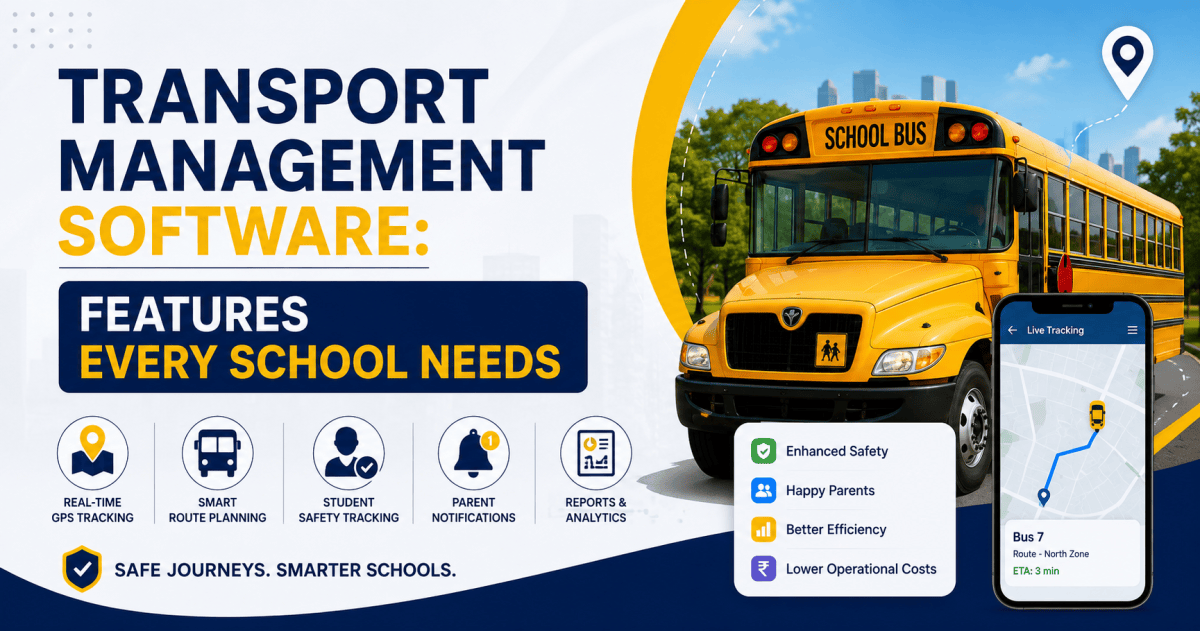
- Real-time GPS vehicle tracking
- RFID/NFC-based student attendance
- Route planning and optimization
- Parent notification system
- Driver and vehicle management
- Emergency alerts and SOS features
- Reporting and analytics dashboard
Challenges of Traditional School Transportation
Many educational institutions still rely on manual transportation processes, which can create several operational challenges:
1. Limited Visibility
Administrators often have no real-time information about bus locations, making it difficult to respond to delays or emergencies.
2. Student Safety Concerns
Without proper monitoring, schools cannot accurately track when students board or leave buses.
3. Inefficient Routes
Poor route planning can increase fuel consumption, travel time, and transportation costs.
4. Communication Gaps
Parents may not receive timely updates regarding bus arrivals, delays, or route changes.
5. Administrative Burden
Managing driver records, vehicle maintenance schedules, attendance logs, and route planning manually consumes significant time and resources.
Benefits of Smart Transport Management Systems
1. Enhanced Student Safety
Student safety is the most important reason educational institutions invest in smart transportation solutions.
Using RFID cards or biometric attendance systems, schools can automatically record when students board and exit buses. Parents and administrators receive instant notifications, ensuring complete visibility throughout the journey.
Benefits include:
- Accurate student tracking
- Reduced risk of missing students
- Immediate emergency response
- Improved accountability
2. Real-Time GPS Tracking
GPS technology allows schools and parents to monitor vehicle locations in real time.
Advantages include:
- Live bus tracking
- Estimated arrival times
- Route monitoring
- Quick response during emergencies
Parents gain confidence knowing exactly where their child’s bus is at any moment.
3. Improved Parent Communication
Modern transport management systems provide mobile apps and automated alerts that keep parents informed.
Notifications can include:
- Bus departure alerts
- Student boarding confirmation
- Student drop-off confirmation
- Delay notifications
- Emergency alerts
This reduces uncertainty and strengthens trust between parents and educational institutions.
4. Optimized Routes and Reduced Costs
Smart route optimization helps institutions create the most efficient transportation routes.
Benefits include:
- Lower fuel expenses
- Reduced vehicle wear and tear
- Shorter travel times
- Better fleet utilization
Efficient transportation management can significantly reduce operational costs while improving service quality.
5. Better Fleet Management
Educational institutions often manage multiple buses and drivers. Smart transport systems provide centralized fleet monitoring capabilities.
Fleet management features include:
- Vehicle tracking
- Driver performance monitoring
- Maintenance scheduling
- Fuel consumption reports
- Compliance management
This ensures vehicles remain safe, reliable, and operational.
6. Automated Attendance Tracking
Manual attendance tracking is time-consuming and prone to errors.
With RFID-enabled transport systems:
- Attendance is recorded automatically.
- Student movement is tracked accurately.
- Administrative workload is reduced.
- Data is available instantly for reporting.
This improves efficiency while maintaining accurate transportation records.
7. Increased Operational Efficiency
Automation helps schools reduce repetitive administrative tasks.
Examples include:
- Automated route assignments
- Digital attendance records
- Scheduled maintenance reminders
- Instant report generation
As a result, staff can focus on more strategic educational and administrative activities.
8. Data-Driven Decision Making
Smart Transport Management Systems generate detailed reports and analytics.
Institutions can analyze:
- Route performance
- Vehicle utilization
- Driver behavior
- Attendance trends
- Fuel consumption
These insights help administrators make informed decisions and continuously improve transportation services.
9. Emergency Management and Safety Alerts
In emergency situations, quick communication is critical.
Smart transport systems offer:
- Panic button integration
- SOS alerts
- Instant parent notifications
- Emergency contact management
- Real-time vehicle tracking
This significantly improves emergency preparedness and response capabilities.
10. Compliance and Transparency
Educational institutions must often comply with transportation safety regulations.
Smart transport solutions help by maintaining:
- Driver records
- Vehicle inspection logs
- Attendance reports
- Route history
- Maintenance records
This improves transparency and simplifies regulatory compliance.
Key Technologies Behind Smart Transport Management
GPS Tracking
Provides real-time vehicle location monitoring.
RFID Technology
Automatically records student boarding and deboarding events.
Mobile Applications
Allow parents, drivers, and administrators to stay connected.
Cloud-Based Platforms
Enable centralized access to transportation data from anywhere.
Analytics and Reporting
Provide valuable operational insights for continuous improvement.
Why Schools and Colleges Should Invest Now
Educational institutions are increasingly expected to provide safe, efficient, and technology-enabled transportation services. Parents demand greater transparency, while administrators seek ways to reduce operational costs and improve efficiency.
A Smart Transport Management System addresses both requirements by delivering:
- Enhanced student safety
- Real-time visibility
- Improved communication
- Lower operational costs
- Better resource utilization
- Increased parent satisfaction
Investing in smart transportation technology today helps institutions create a safer, more efficient, and future-ready educational environment.
Conclusion
As educational institutions continue to embrace digital transformation, transportation management has become a critical area for innovation. A Smart Transport Management System combines GPS tracking, RFID technology, route optimization, and real-time communication to deliver safer, smarter, and more efficient transportation services.
By implementing a modern transport management solution, schools and colleges can improve student safety, enhance parent trust, streamline operations, and reduce costs. The result is a transportation ecosystem that supports the institution’s commitment to excellence, safety, and operational efficiency.
Need help with Transport Management System? BSD Infotech supplies the hardware, builds the software and integrates both.
Request a Quote