
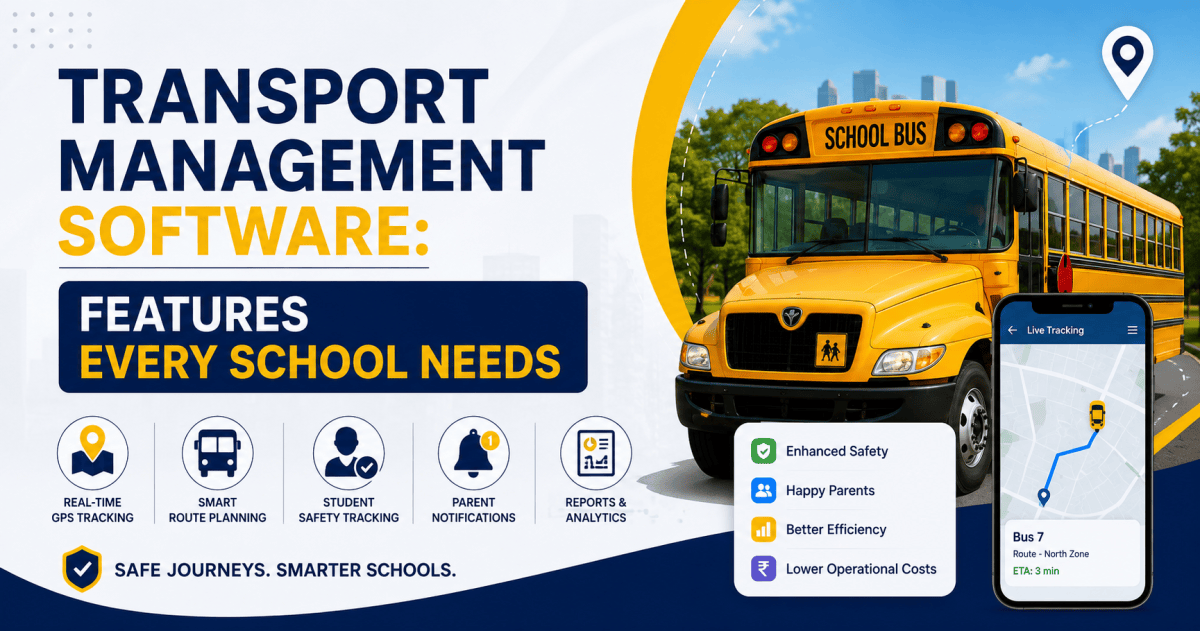
Transport Management Software: Features Every School Needs
Contents
- What Is Transport Management Software?
- 1. Real-Time GPS Tracking
- 2. Smart Route Planning and Optimization
- 3. Student Pickup and Drop Tracking
- 4. Parent Notifications and Alerts
- 5. Driver and Staff Management
- 6. Vehicle Management
- 7. Vehicle Maintenance and Service Scheduling
- 8. Emergency and SOS Alerts
- 9. Geofencing and Route Deviation Alerts
- 10. Driver Behavior Monitoring
- 11. Transport Fee Management
- 12. Mobile App for Parents and Drivers
- 13. Attendance Integration
- 14. Centralized Dashboard and Reports
- Benefits of Transport Management Software for Schools
- Essential Features Checklist
- Conclusion
Managing school transportation is a major responsibility. Every day, schools must ensure that students are picked up and dropped off safely, buses follow the correct routes, drivers operate responsibly, and parents stay informed.
Traditional methods such as spreadsheets, phone calls, and manual registers can make transport operations difficult to manage. This is where Transport Management Software becomes essential.
A modern school transport management system helps educational institutions manage vehicles, routes, students, drivers, attendance, and real-time communication from a centralized platform.
In this article, we explore the essential features every school should look for in transport management software.
What Is Transport Management Software?
Transport Management Software is a digital solution designed to simplify and automate school transportation operations. It allows administrators to manage buses, routes, stops, drivers, students, and transport-related activities from one centralized dashboard.
Modern systems can also integrate GPS tracking, student boarding records, parent notifications, route optimization, vehicle maintenance, and emergency alerts.
The goal is simple: make school transportation safer, smarter, and more efficient.
1. Real-Time GPS Tracking
Real-time GPS tracking is one of the most important features of modern transport management software.
Schools should be able to monitor the live location of every bus or vehicle through a centralized dashboard. Parents can also receive access to track the bus and know its estimated arrival time.
Key benefits include:
- Live vehicle location tracking
- Estimated arrival time
- Route monitoring
- Delay identification
- Better operational visibility
- Increased parent confidence
GPS tracking eliminates the need for parents to repeatedly call the school transport department to ask, “Where is the bus?” Modern school transport platforms commonly combine live GPS visibility with ETA and parent alerts.
2. Smart Route Planning and Optimization
Poorly planned routes can increase travel time, fuel consumption, and operational costs.
Transport Management Software should allow schools to create and manage:
- Multiple bus routes
- Pickup and drop locations
- Bus stops
- Student allocations
- Route timings
- Distance calculations
Advanced route optimization can help schools identify more efficient routes based on student locations and stop sequences.
A well-planned route means:
- Reduced travel time
- Lower fuel costs
- Better vehicle utilization
- Improved punctuality
- Less confusion for drivers and staff
Route planning and stop management are core capabilities highlighted across modern school transport systems.
3. Student Pickup and Drop Tracking
Student safety should always be the top priority.
A reliable transport management system should record when a student:
- Boards the bus
- Arrives at school
- Leaves the school
- Gets dropped at their designated stop
This information can be captured using technologies such as:
- RFID cards
- NFC cards
- Biometric systems
- Mobile applications
Parents can receive instant notifications confirming their child’s pickup or drop-off status. Modern systems increasingly support RFID/NFC-based boarding records and automated parent notifications.
4. Parent Notifications and Alerts
Communication is extremely important when managing school transportation.
Parents should receive automatic alerts about important events, such as:
- Bus approaching the pickup point
- Student boarding the bus
- Student reaching school
- Bus delays
- Route changes
- Emergency situations
- Student drop-off confirmation
Notifications can be sent through:
- Mobile applications
- SMS
- Push notifications
Automated communication improves transparency and gives parents peace of mind.
5. Driver and Staff Management
A school transport system should maintain complete records of drivers, conductors, and attendants.
Important information may include:
- Driver name and contact details
- License information
- License expiry date
- Identity documents
- Background verification
- Assigned vehicle
- Duty schedules
- Attendance records
Automated expiry reminders can help schools ensure that important documents remain updated.
Proper driver management improves accountability and helps administrators manage transportation staff more efficiently.
6. Vehicle Management
Schools need complete visibility into their transportation fleet.
Transport Management Software should maintain digital records for every vehicle, including:
- Vehicle registration number
- Seating capacity
- Insurance details
- Fitness certificates
- Pollution certificates
- Permit information
- Service history
The system should also provide automated alerts before important documents expire.
This reduces the risk of missing compliance deadlines and helps schools maintain safer vehicles.
7. Vehicle Maintenance and Service Scheduling
Regular maintenance is essential for safe school transportation.
A good transport management system should allow administrators to schedule and track:
- Vehicle servicing
- Oil changes
- Tyre replacement
- Battery maintenance
- General inspections
- Repair history
Automated maintenance reminders can help prevent unexpected vehicle breakdowns.
Benefits include:
- Improved vehicle reliability
- Reduced breakdown risks
- Longer vehicle lifespan
- Better safety
- Lower maintenance costs
8. Emergency and SOS Alerts
Emergencies can happen unexpectedly. Schools should have a system that allows drivers or transport staff to quickly report an emergency.
An SOS feature can instantly notify:
- School administrators
- Transport managers
- Emergency contacts
Some advanced transport solutions also support emergency communication, panic alerts, and driver-behavior monitoring.
This ensures faster response during situations such as:
- Vehicle breakdowns
- Accidents
- Medical emergencies
- Route deviations
- Security concerns
9. Geofencing and Route Deviation Alerts
Geofencing allows schools to create virtual boundaries around specific locations.
For example, administrators can define:
- School campus boundaries
- Bus stops
- Authorized routes
- Restricted areas
The system can send alerts when a vehicle:
- Deviates from its assigned route
- Leaves an authorized area
- Reaches a specific location
- Stops unexpectedly
This provides an additional layer of security and operational control.
10. Driver Behavior Monitoring
Student safety also depends on responsible driving.
Modern transport management systems can help monitor driver behavior, including:
- Overspeeding
- Harsh braking
- Long vehicle stoppages
- Route deviations
Administrators can receive alerts and reports that help identify unsafe driving patterns.
This feature encourages safer driving and improves accountability among transport staff.
11. Transport Fee Management
Managing transportation fees manually can create additional administrative work.
Integrated transport management software can connect student route assignments with the school’s fee management system.
Schools can:
- Assign transport fees automatically
- Create route-wise fee structures
- Track pending payments
- Generate payment reports
- Issue digital receipts
This reduces manual data entry and helps maintain accurate financial records.
12. Mobile App for Parents and Drivers
Mobile accessibility is becoming increasingly important.
A parent mobile app can provide features such as:
- Live bus tracking
- Estimated arrival time
- Pickup notifications
- Drop notifications
- Transport announcements
Similarly, a driver app can help drivers access:
- Assigned routes
- Student lists
- Stop details
- Daily schedules
- Pickup and drop status
Mobile applications improve communication between everyone involved in school transportation.
13. Attendance Integration
Transport Management Software becomes even more powerful when integrated with a school’s attendance system.
For example, if a student is absent from school, transport coordinators can receive this information.
Similarly, student boarding data can be connected with attendance records.
Integration helps schools maintain accurate information across different departments and reduces duplicate data entry.
14. Centralized Dashboard and Reports
School administrators need quick access to important transportation information.
A centralized dashboard should provide insights into:
- Active vehicles
- Current bus locations
- Route performance
- Student transportation records
- Driver activity
- Vehicle maintenance
- Fuel usage
- Delays and incidents
Reports help school management make better operational decisions.
Benefits of Transport Management Software for Schools
Implementing a modern transport management system provides several benefits.
Improved Student Safety
Real-time tracking, student boarding records, emergency alerts, and route monitoring create a safer transportation environment.
Better Parent Communication
Parents receive timely information about their child’s transportation status.
Reduced Administrative Work
Automation reduces the need for manual registers, spreadsheets, and phone calls.
Lower Operational Costs
Route optimization and vehicle monitoring can help reduce unnecessary fuel consumption and improve fleet utilization.
Increased Transparency
School administrators have complete visibility into transportation operations.
Better Decision-Making
Reports and dashboards help management identify problems and improve transport performance.
Essential Features Checklist
Before choosing Transport Management Software, schools should ensure it includes:
- Real-time GPS tracking
- Route planning and optimization
- Student pickup and drop tracking
- RFID/NFC attendance integration
- Parent notifications
- Driver management
- Vehicle management
- Maintenance scheduling
- Document expiry alerts
- Emergency SOS alerts
- Geofencing
- Driver behavior monitoring
- Transport fee integration
- Mobile applications
- Reports and analytics
Conclusion
School transportation is not just about moving students from one location to another. It is about ensuring safety, communication, accountability, and operational efficiency.
A modern Transport Management Software solution gives schools complete control over their transportation operations. From live GPS tracking and route optimization to student attendance and parent notifications, the right system can transform the way schools manage their fleets.
As schools continue to adopt digital technology, smart transport management will become an essential part of a connected school ecosystem.
The right technology doesn’t just help schools manage buses—it helps them build a safer and more transparent journey for every student.
Need help with Transport Management System? BSD Infotech supplies the hardware, builds the software and integrates both.
Request a Quote