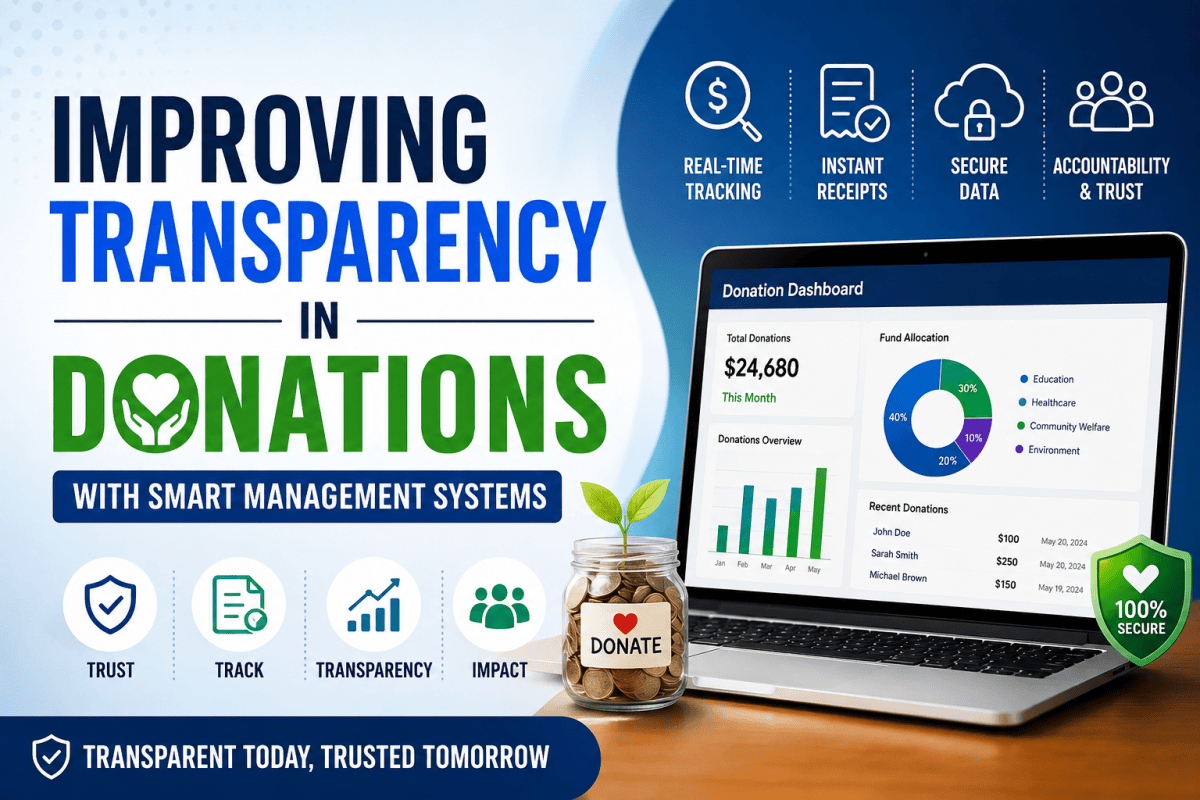
Improving Transparency in Donations with Smart Management Systems
Contents
Donations play a crucial role in supporting charities, educational institutions, religious organizations, NGOs, and community welfare programs. However, one of the biggest concerns among donors is transparency—how their contributions are utilized and whether they reach the intended beneficiaries. A lack of visibility can reduce trust and discourage future donations.
Smart Donation Management Systems are transforming the way organizations manage, track, and report donations. By leveraging digital technologies, these systems provide real-time transparency, accurate record-keeping, and enhanced accountability, helping organizations build stronger relationships with donors.
What is a Smart Donation Management System?
A Smart Donation Management System is a digital platform that automates and streamlines the entire donation process. It records donations, tracks fund allocation, generates reports, and provides real-time updates to both donors and administrators.
These systems can be integrated with online payment gateways, mobile applications, cloud databases, and reporting dashboards to ensure complete transparency and efficient fund management.
Why Transparency Matters in Donations
Transparency is the foundation of donor trust. When donors clearly understand how their money is being used, they are more likely to contribute again and recommend the organization to others.
Benefits of transparent donation management include:
- Increased donor confidence
- Higher donor retention rates
- Improved organizational credibility
- Better compliance with regulations
- Reduced risk of fraud and mismanagement
Key Features of Smart Donation Management Systems
1. Real-Time Donation Tracking
Smart systems allow donors to track their contributions from the moment they are received. Organizations can provide updates on how funds are allocated and used for specific projects.
2. Automated Digital Receipts
Every donation is automatically recorded, and donors receive instant receipts through email or SMS. This improves record accuracy and simplifies tax documentation.
3. Centralized Data Management
All donation records are stored in a secure centralized database, making it easier for administrators to monitor transactions, generate reports, and maintain accurate records.
4. Transparent Fund Allocation
Organizations can categorize donations by project, campaign, or beneficiary. Donors can see where their contributions are directed, ensuring greater accountability.
5. Reporting and Analytics
Built-in dashboards provide detailed reports on donation trends, campaign performance, and fund utilization. These insights help organizations make informed decisions and demonstrate transparency.
6. Secure Payment Processing
Modern donation platforms support secure payment gateways with encryption and fraud protection, safeguarding donor information and financial transactions.
Benefits for Non-Profit Organizations
Enhanced Donor Trust
Transparency encourages donors to continue supporting the organization. When contributors can view reports and updates, they feel more connected to the cause.
Improved Operational Efficiency
Automated workflows reduce manual tasks such as data entry, receipt generation, and financial reconciliation, saving time and resources.
Better Fundraising Performance
Organizations with transparent donation practices often experience stronger donor engagement and increased fundraising success.
Regulatory Compliance
Smart systems maintain accurate records and audit trails, helping organizations meet financial and legal reporting requirements.
Benefits for Donors
Donors gain greater confidence when they have access to information about how their donations are used. They can:
- Receive instant confirmation of donations
- Track project progress
- Access donation history anytime
- Download receipts and reports
- Verify fund utilization
This level of visibility strengthens trust and encourages long-term support.
Role of Cloud Technology in Donation Transparency
Cloud-based donation management systems offer secure access to data from anywhere. Authorized users can monitor donations, generate reports, and share updates in real time. Cloud technology also ensures data backup, scalability, and enhanced security.
Future of Smart Donation Management
Emerging technologies such as Artificial Intelligence (AI), Blockchain, and advanced analytics are further improving donation transparency. These technologies can provide immutable transaction records, predictive fundraising insights, and automated compliance monitoring.
As donor expectations continue to evolve, organizations that adopt smart management systems will be better positioned to build trust, improve efficiency, and maximize their social impact.
Conclusion
Transparency is essential for maintaining donor confidence and ensuring the effective use of charitable contributions. Smart Donation Management Systems empower organizations with real-time tracking, secure record-keeping, automated reporting, and enhanced accountability.
By adopting modern donation management solutions, organizations can strengthen donor relationships, improve operational efficiency, and create a more transparent and trustworthy donation ecosystem for everyone involved.
Need help with Donations Management Systems? BSD Infotech supplies the hardware, builds the software and integrates both.
Request a Quote