
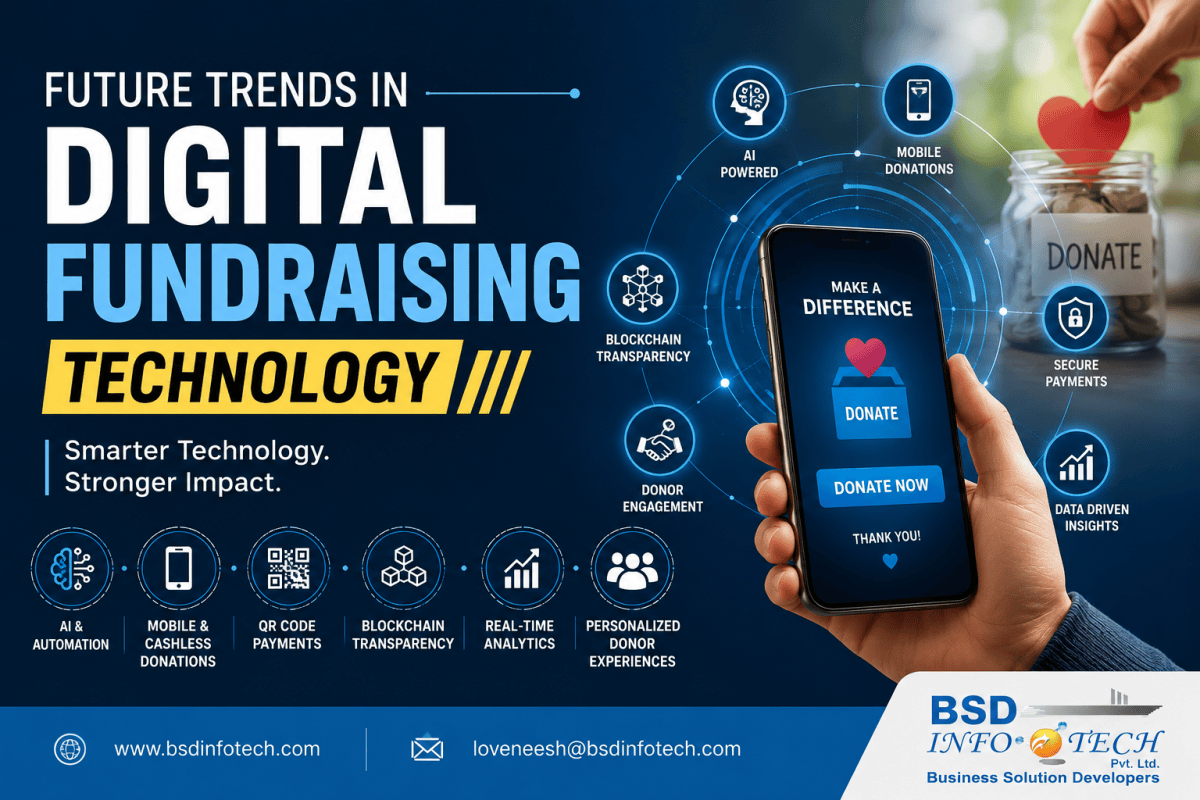
Future Trends in Digital Fundraising Technology
Contents
- 1. Artificial Intelligence-Powered Fundraising
- 2. Mobile-First Donation Platforms
- 3. QR Code-Based Donations
- 4. Personalized Donor Experiences
- 5. Blockchain for Transparent Donations
- 6. Automated Fundraising Management
- 7. Integration with Social Media Platforms
- 8. Contactless and Cashless Donations
- 9. Real-Time Donation Analytics
- 10. Recurring and Subscription-Based Donations
- 11. Enhanced Security and Fraud Prevention
- 12. Integrated Fundraising Management Platforms
- The Future of Digital Fundraising
- Conclusion
Fundraising has evolved significantly over the past decade. Traditional methods such as cash donations, physical collection boxes, and offline campaigns are increasingly being replaced by digital platforms. With the growth of mobile technology, artificial intelligence, automation, and secure payment systems, organizations can now connect with donors faster and more efficiently.
The future of fundraising is expected to become more personalized, transparent, automated, and technology-driven. Digital fundraising platforms will play a crucial role in helping NGOs, charitable organizations, educational institutions, religious organizations, and social initiatives manage donations effectively.
In this article, we explore the major future trends shaping digital fundraising technology.
1. Artificial Intelligence-Powered Fundraising
Artificial Intelligence (AI) is expected to transform how organizations interact with donors. AI-powered systems can analyze donor behavior, preferences, and donation history to create personalized fundraising campaigns.
For example, AI can help organizations identify:
- Potential high-value donors
- Donor interests and preferences
- Best time to request donations
- Campaigns likely to generate higher engagement
AI-powered chatbots can also provide instant responses to donor queries, improving communication and engagement.
Benefits of AI in Fundraising
- Personalized donor communication
- Improved campaign targeting
- Automated donor support
- Better donation predictions
- Increased fundraising efficiency
2. Mobile-First Donation Platforms
Mobile devices are becoming the primary channel for digital transactions. In the future, fundraising platforms will focus more on providing fast and convenient mobile donation experiences.
Donors will increasingly expect features such as:
- One-click donations
- Mobile wallets
- QR code payments
- UPI payments
- Contactless donations
- Social media donation links
A mobile-friendly donation platform can significantly improve donor convenience and increase participation.
3. QR Code-Based Donations
QR code technology is becoming increasingly popular for quick and contactless payments. Organizations can place QR codes on posters, events, websites, brochures, and social media campaigns.
Donors simply scan the QR code and complete their donation instantly.
This technology is especially useful for:
- Charity events
- Religious institutions
- Educational institutions
- Public fundraising campaigns
- Disaster relief programs
QR-based fundraising reduces the donation process to just a few seconds.
4. Personalized Donor Experiences
Generic fundraising messages are becoming less effective. The future of digital fundraising will focus heavily on personalization.
Fundraising platforms will use data analytics to create customized communication based on donor interests and previous interactions.
For example, instead of sending the same message to every donor, organizations can send personalized updates such as:
“Your previous contribution helped provide educational resources to 50 students.”
Personalized communication helps donors understand the direct impact of their contributions and encourages long-term engagement.
5. Blockchain for Transparent Donations
Transparency is one of the biggest concerns in fundraising. Donors want to know how their money is being used.
Blockchain technology has the potential to improve transparency by creating secure and traceable donation records.
Potential benefits include:
- Transparent donation tracking
- Secure transaction records
- Reduced fraud risks
- Improved donor trust
- Better financial accountability
In the future, donors may be able to track their contribution from the moment they donate until the funds are used for a specific cause.
6. Automated Fundraising Management
Manual donation management can be time-consuming and prone to errors. Future fundraising platforms will increasingly rely on automation.
Automation can handle tasks such as:
- Donation receipts
- Thank-you emails
- Donor reminders
- Recurring donations
- Campaign updates
- Financial reports
This allows organizations to reduce administrative work and focus more on their fundraising goals.
7. Integration with Social Media Platforms
Social media will continue to play an important role in digital fundraising.
Platforms such as Instagram, Facebook, LinkedIn, and other digital channels allow organizations to reach a larger audience quickly.
Future fundraising campaigns may include:
- Social media donation buttons
- Live fundraising events
- Influencer collaborations
- Viral fundraising campaigns
- Real-time campaign progress updates
Social media integration makes fundraising more interactive and helps organizations connect emotionally with potential donors.
8. Contactless and Cashless Donations
The demand for contactless transactions is growing rapidly. Digital fundraising platforms will increasingly support multiple cashless payment options.
These may include:
- Credit and debit cards
- UPI
- Mobile wallets
- Net banking
- NFC payments
- Digital payment gateways
Providing multiple payment options makes the donation process easier and more accessible for different types of donors.
9. Real-Time Donation Analytics
Data analytics will become an essential part of fundraising management.
Organizations will be able to monitor campaign performance in real time through digital dashboards.
Important metrics may include:
- Total donations received
- Number of donors
- Campaign performance
- Donor retention rate
- Average donation value
- Payment method preferences
Real-time analytics can help organizations make faster and better decisions during fundraising campaigns.
10. Recurring and Subscription-Based Donations
Recurring donations are expected to become increasingly popular.
Instead of making a one-time contribution, donors can choose to donate automatically on a weekly, monthly, or yearly basis.
Digital fundraising platforms will make recurring donations simple through automated payment systems.
Benefits of Recurring Donations
- Predictable fundraising income
- Better donor retention
- Reduced fundraising effort
- Long-term donor relationships
This model can help organizations maintain a stable and consistent flow of funds.
11. Enhanced Security and Fraud Prevention
As digital donations increase, cybersecurity will become more important.
Future fundraising platforms will focus on protecting donor information and preventing fraudulent transactions.
Advanced security features may include:
- Multi-factor authentication
- Secure payment gateways
- Data encryption
- AI-based fraud detection
- Biometric authentication
Strong security measures will help organizations build trust with donors.
12. Integrated Fundraising Management Platforms
The future will move toward all-in-one fundraising platforms that combine multiple functions in a single system.
Instead of using separate tools for donations, donor management, payments, communication, and reporting, organizations will use integrated platforms.
A complete digital fundraising system may include:
- Online donation portal
- Donor database
- Payment gateway integration
- QR code donations
- Automated receipts
- Campaign management
- Analytics dashboard
- Communication tools
This centralized approach can simplify fundraising operations and improve efficiency.
The Future of Digital Fundraising
The future of fundraising will be more connected, intelligent, and donor-focused. Technologies such as Artificial Intelligence, automation, blockchain, mobile payments, and data analytics will continue to transform the fundraising ecosystem.
Organizations that adopt digital fundraising technology early will be better positioned to engage donors, improve transparency, and manage campaigns efficiently.
The key focus will no longer be simply collecting donations. Instead, successful fundraising will focus on building strong donor relationships, creating transparency, and delivering a seamless digital experience.
Conclusion
Digital fundraising technology is shaping a smarter and more efficient future for charitable organizations and fundraising initiatives. AI-powered insights, automated processes, secure payment systems, and personalized donor experiences will help organizations connect with supporters like never before.
As technology continues to evolve, organizations must embrace digital transformation to make fundraising more accessible, transparent, secure, and impactful.
The future of fundraising is digital—and technology will make every contribution more meaningful.
Need help with Donations Management Systems? BSD Infotech supplies the hardware, builds the software and integrates both.
Request a Quote