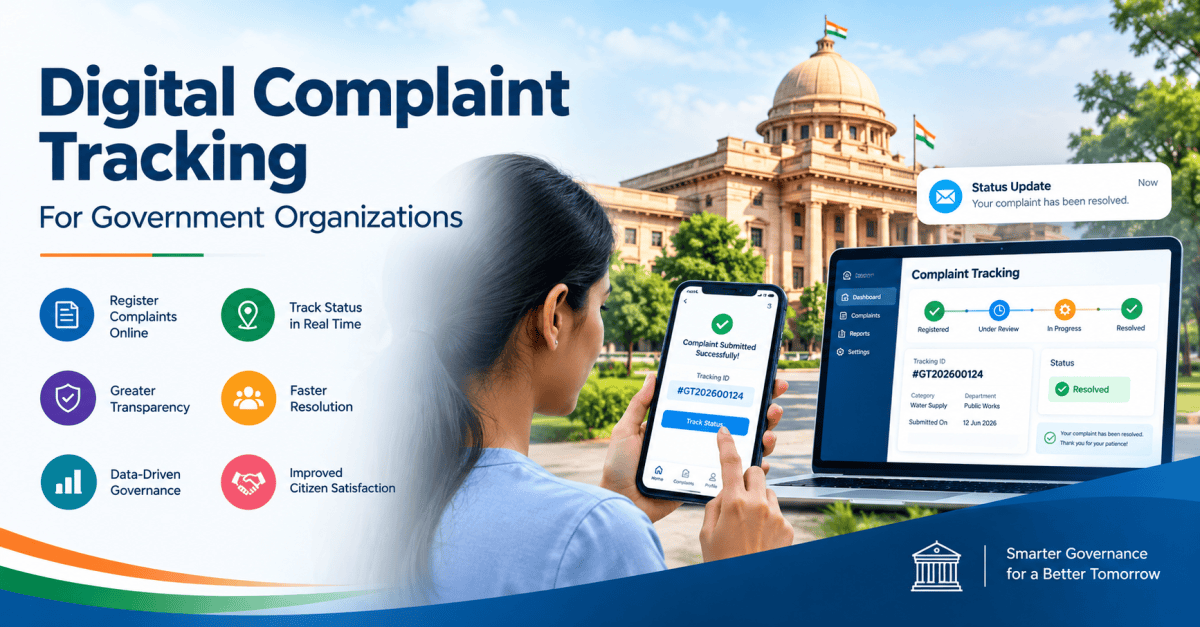
Importance of SLA Tracking in Grievance Redressal Systems: 10 Powerful Benefits for Faster Complaint Resolution
Contents
- Importance of SLA Tracking in Grievance Redressal Systems
- What is SLA Tracking?
- Why SLA Tracking Matters
- 10 Benefits of SLA Tracking in Grievance Redressal Systems
- 1. Faster Complaint Resolution
- 2. Improves Accountability
- 3. Automatic Escalation of Delayed Complaints
- 4. Enhances Customer Satisfaction
- 5. Reduces Complaint Backlogs
- 6. Real-Time Monitoring and Alerts
- 7. Better Performance Measurement
- 8. Ensures Transparency
- 9. Supports Regulatory Compliance
- 10. Data-Driven Decision Making
- Key Features of an SLA-Based Grievance Redressal System
- Industries That Benefit from SLA Tracking
- Best Practices for Effective SLA Tracking
- Future of SLA Tracking in Grievance Management
- Conclusion
- Frequently Asked Questions (FAQs)
Importance of SLA Tracking in Grievance Redressal Systems
In today’s digital world, organizations receive hundreds or even thousands of complaints from customers, employees, students, citizens, and stakeholders every day. Whether it’s a government department handling public grievances, a corporate HR team resolving employee concerns, or an educational institution managing student complaints, timely resolution is essential.
Unfortunately, delayed responses often lead to dissatisfaction, reduced trust, and poor service quality.
This is where the Importance of SLA Tracking in Grievance Redressal Systems becomes evident.
A Service Level Agreement (SLA) defines the maximum time allowed to acknowledge, investigate, and resolve a complaint. SLA tracking continuously monitors every grievance to ensure that deadlines are met and issues are resolved promptly.
Modern grievance management software uses automated SLA tracking to improve accountability, transparency, and customer satisfaction.
In this article, we’ll explore why SLA tracking is a critical component of every grievance redressal system.
What is SLA Tracking?
SLA (Service Level Agreement) Tracking is the process of monitoring complaint resolution timelines against predefined service standards.
For example:
- Complaint acknowledgement within 2 hours
- Initial response within 8 hours
- Resolution within 48 hours
- Escalation if unresolved after the deadline
The grievance management system automatically tracks these deadlines and alerts responsible officers before an SLA breach occurs.
Why SLA Tracking Matters
Without SLA monitoring:
- Complaints remain unattended
- Teams forget pending issues
- Resolution gets delayed
- Citizens lose trust
- Customers become frustrated
- Management has no visibility into performance
SLA tracking eliminates these problems through automation.
10 Benefits of SLA Tracking in Grievance Redressal Systems
1. Faster Complaint Resolution
The biggest advantage of SLA tracking is timely complaint resolution.
Instead of allowing complaints to sit unnoticed, the system continuously monitors deadlines and reminds responsible officers.
Benefits include:
- Reduced response time
- Faster investigations
- Quick decision-making
- Improved service quality
Timely action improves user confidence and satisfaction.
2. Improves Accountability
Every complaint is assigned to a responsible employee or department.
SLA tracking records:
- Who received the complaint
- When it was assigned
- Time taken to respond
- Resolution date
- Delay reasons
This creates complete accountability across the organization.
3. Automatic Escalation of Delayed Complaints
Sometimes complaints are ignored due to workload or oversight.
SLA-enabled systems automatically escalate overdue grievances to higher authorities.
For example:
- Level 1: Assigned Officer
- Level 2: Department Manager
- Level 3: Regional Head
- Level 4: Administrator
Automatic escalation prevents complaints from being forgotten.
4. Enhances Customer Satisfaction
People expect quick responses.
When complaints are resolved within promised timelines:
- Customers feel valued
- Employees trust management
- Students feel heard
- Citizens gain confidence
Satisfied users are more likely to continue engaging positively with the organization.
5. Reduces Complaint Backlogs
Without SLA tracking, unresolved complaints accumulate over time.
Managers struggle to identify pending cases.
SLA dashboards provide:
- Pending complaints
- High-priority issues
- Overdue cases
- Daily workload
- Resolution progress
This enables teams to clear backlogs efficiently.
6. Real-Time Monitoring and Alerts
Modern grievance systems provide real-time notifications.
Alerts may include:
- SLA nearing deadline
- Complaint overdue
- Escalation triggered
- High-priority issue assigned
- Resolution pending approval
Real-time alerts help teams act before deadlines are missed.
7. Better Performance Measurement
Managers can evaluate employee performance using SLA metrics.
Reports include:
- Average resolution time
- SLA compliance percentage
- Escalation frequency
- Department-wise performance
- Complaint aging reports
These insights support fair performance reviews and operational improvements.
8. Ensures Transparency
Every action is timestamped and recorded.
Users can track:
- Complaint submitted
- Assigned officer
- Current status
- Pending actions
- Expected resolution date
Transparency reduces confusion and increases trust.
9. Supports Regulatory Compliance
Many industries and government organizations must comply with strict complaint resolution timelines.
Examples include:
- Banking
- Insurance
- Healthcare
- Educational institutions
- Government departments
- Utility services
SLA tracking helps organizations demonstrate compliance through detailed records and audit trails.
10. Data-Driven Decision Making
SLA reports reveal patterns that management can use to improve services.
For example:
- Departments with the highest delays
- Frequently reported issues
- Seasonal complaint trends
- Average handling time
- Resource shortages
Organizations can use this data to optimize staffing, processes, and training.
Key Features of an SLA-Based Grievance Redressal System
A modern grievance management solution should include:
- Automated SLA timer
- Complaint categorization
- Priority-based routing
- Auto-assignment
- Email and SMS notifications
- Escalation workflows
- Real-time dashboards
- Analytics and reporting
- Audit logs
- Mobile accessibility
- Role-based access control
These features ensure timely and efficient complaint handling.
Industries That Benefit from SLA Tracking
SLA tracking is valuable across multiple sectors:
- Government grievance portals
- Schools and universities
- Corporate HR departments
- Hospitals and healthcare providers
- Banks and financial institutions
- Insurance companies
- Telecom providers
- IT service desks
- Manufacturing companies
- Public utility services
Each sector can improve response times, accountability, and stakeholder satisfaction.
Best Practices for Effective SLA Tracking
To maximize the benefits of SLA tracking:
- Define clear resolution timelines for different complaint types.
- Assign ownership for every grievance.
- Automate reminders and escalations.
- Monitor SLA compliance through dashboards.
- Review performance reports regularly.
- Train employees on grievance handling procedures.
- Continuously improve workflows based on analytics.
Following these practices helps maintain high service standards and consistent complaint resolution.
Future of SLA Tracking in Grievance Management
Emerging technologies are making SLA tracking even more effective.
Future advancements include:
- Artificial Intelligence for complaint prioritization
- Predictive analytics for workload forecasting
- Chatbots for instant acknowledgments
- Machine learning for resolution recommendations
- Automated workflow optimization
- Mobile-first grievance management
- Cloud-based dashboards
- Real-time executive analytics
These innovations will help organizations deliver faster, smarter, and more transparent grievance resolution.
Conclusion
The Importance of SLA Tracking in Grievance Redressal Systems cannot be overstated. By defining clear response timelines, automating reminders, enabling escalations, and providing real-time visibility, SLA tracking helps organizations resolve complaints more efficiently and build trust with customers, employees, students, and citizens.
Whether you are managing public grievances, employee concerns, or customer complaints, implementing an SLA-driven grievance redressal system can significantly improve operational efficiency, accountability, and service quality. As organizations continue to embrace digital transformation, SLA tracking will remain a cornerstone of effective grievance management.
Frequently Asked Questions (FAQs)
1. What is SLA tracking in a grievance redressal system?
SLA tracking monitors complaint resolution timelines against predefined service standards, ensuring grievances are addressed within agreed deadlines.
2. Why is SLA tracking important?
It improves response times, accountability, transparency, customer satisfaction, and compliance while reducing complaint backlogs.
3. How does SLA tracking improve grievance management?
It automates reminders, triggers escalations for overdue cases, provides real-time dashboards, and measures team performance to ensure timely resolution.
4. Which organizations benefit from SLA tracking?
Government departments, educational institutions, healthcare providers, banks, corporate HR teams, telecom companies, and customer support centers all benefit from SLA-based grievance management.
5. What features should an SLA-enabled grievance system include?
Essential features include automated SLA timers, escalation workflows, real-time dashboards, notifications, reporting, audit trails, role-based access, and mobile support.
Need help with Complaint Management? BSD Infotech supplies the hardware, builds the software and integrates both.
Request a Quote