Reducing Inventory Loss and Pilferage with Smart Tracking Systems
Contents
- Understanding Inventory Loss and Pilferage
- What Are Smart Tracking Systems?
- Benefits of Smart Tracking Systems
- Role of RFID Technology in Loss Prevention
- Biometric Access Control for Inventory Security
- Integrating Smart Tracking with Inventory Management Software
- Best Practices for Reducing Inventory Loss
- Future Trends in Inventory Security
- Conclusion
Inventory loss and pilferage are major challenges faced by businesses across industries, including retail stores, warehouses, manufacturing units, and distribution centers. Missing stock, unauthorized movement of goods, employee theft, administrative errors, and poor inventory visibility can result in significant financial losses. As businesses expand, manual inventory management methods become increasingly ineffective.
Smart tracking systems provide a modern solution by offering real-time visibility, automated monitoring, and accurate inventory records. Technologies such as RFID, barcode systems, biometric authentication, IoT sensors, and cloud-based inventory management platforms help organizations minimize losses while improving operational efficiency.
Understanding Inventory Loss and Pilferage
Inventory loss occurs when the recorded inventory does not match the actual physical stock. Common causes include:
- Employee theft
- Shoplifting and external theft
- Misplaced inventory
- Human data-entry errors
- Unauthorized stock movement
- Supplier fraud
- Damaged or expired products
Even small discrepancies can accumulate over time, resulting in reduced profitability and customer dissatisfaction.
What Are Smart Tracking Systems?
Smart tracking systems combine advanced hardware and software technologies to monitor inventory movement throughout the supply chain. These systems automatically capture inventory data, track item locations, and generate real-time reports.
Common technologies include:
- RFID (Radio Frequency Identification)
- Barcode and QR code systems
- Biometric access control
- GPS tracking
- IoT-enabled sensors
- Cloud-based inventory management software
- Mobile inventory scanning devices
These technologies create a transparent inventory ecosystem where every movement is recorded and traceable.
Benefits of Smart Tracking Systems
1. Real-Time Inventory Visibility
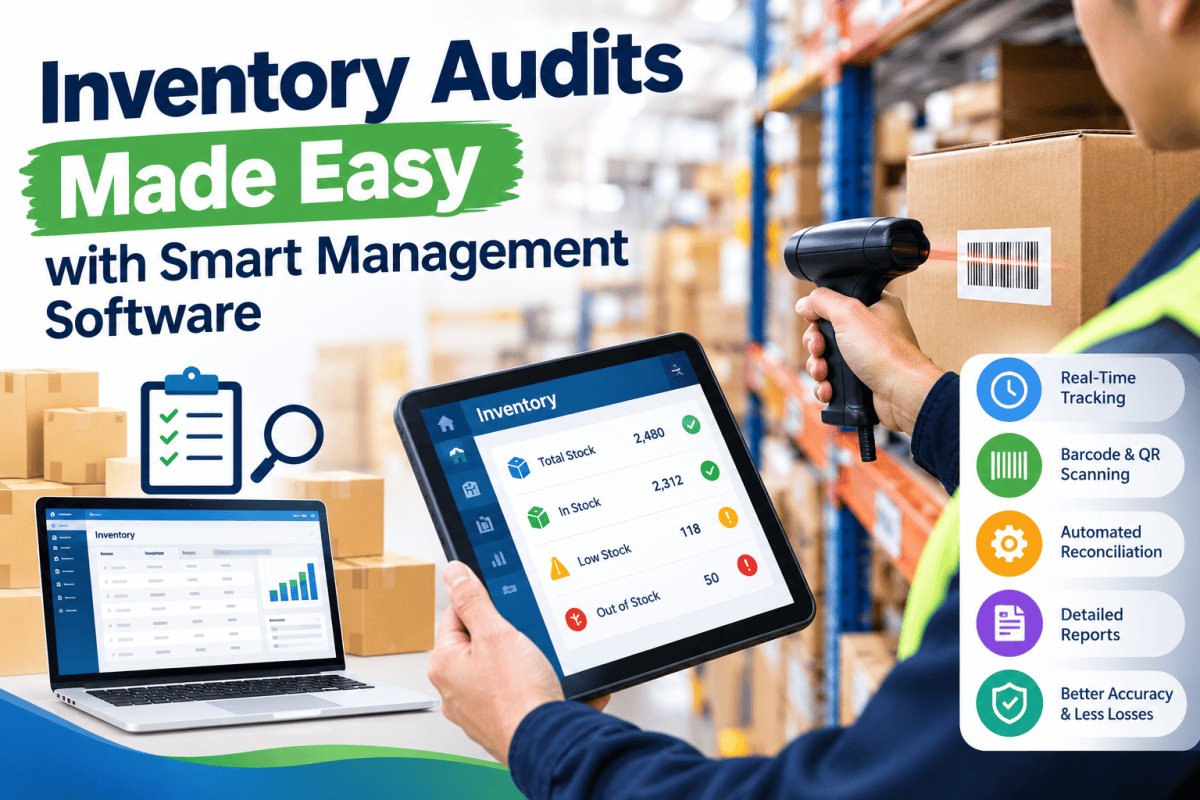
Smart tracking systems provide instant updates whenever inventory is received, moved, sold, or dispatched. Managers can monitor stock levels across multiple locations from a centralized dashboard.
Benefits include:
- Reduced stock discrepancies
- Faster stock audits
- Improved inventory accuracy
- Better demand forecasting
2. Prevention of Unauthorized Access
Biometric authentication systems restrict inventory access to authorized personnel only. Fingerprint, facial recognition, or smart card-based access systems create accountability and maintain detailed access logs.
Advantages:
- Reduced internal theft
- Enhanced warehouse security
- Accurate employee activity records
- Improved compliance management
3. Automated Inventory Tracking
RFID tags and barcode scanners eliminate manual record-keeping and significantly reduce human errors. Every inventory movement is automatically recorded in the system.
Key benefits:
- Faster stock counting
- Reduced administrative workload
- Improved data accuracy
- Enhanced operational efficiency
4. Faster Detection of Inventory Discrepancies
Smart systems immediately flag unusual inventory movements or mismatches. Automated alerts help managers investigate issues before losses become substantial.
Examples include:
- Unexpected stock reductions
- Unauthorized inventory transfers
- Missing inventory items
- Duplicate transactions
5. Enhanced Audit and Reporting Capabilities
Modern inventory platforms generate detailed reports on stock movements, employee activities, and inventory trends.
Useful reports include:
- Inventory variance reports
- Access logs
- Transaction histories
- Loss prevention analytics
- Product movement tracking
These insights support better decision-making and accountability.
Role of RFID Technology in Loss Prevention
RFID technology is one of the most effective tools for inventory security. Unlike traditional barcodes, RFID tags can be scanned without direct line-of-sight and can track multiple items simultaneously.
Benefits of RFID include:
- Real-time location tracking
- Faster inventory counts
- Improved stock visibility
- Reduced theft opportunities
- Automated inventory reconciliation
Retailers and warehouses using RFID often experience significant reductions in inventory shrinkage.
Biometric Access Control for Inventory Security
Inventory losses frequently occur due to unauthorized access to storage areas. Biometric access control systems strengthen security by ensuring only approved personnel can enter sensitive locations.
Common biometric methods include:
- Fingerprint recognition
- Facial recognition
- Iris scanning
Benefits:
- Eliminates password sharing
- Prevents unauthorized entry
- Maintains accurate access records
- Improves accountability
Organizations handling high-value assets particularly benefit from biometric security solutions.
Integrating Smart Tracking with Inventory Management Software
The greatest benefits are achieved when tracking technologies are integrated with centralized inventory management software.
Integrated systems provide:
- Real-time stock synchronization
- Automated reorder notifications
- Multi-location inventory management
- Detailed audit trails
- Cloud-based reporting and analytics
This integration helps businesses maintain complete control over inventory operations.
Best Practices for Reducing Inventory Loss
To maximize the effectiveness of smart tracking systems, businesses should:
- Conduct regular inventory audits.
- Implement RFID or barcode-based tracking.
- Restrict warehouse access using biometric systems.
- Monitor inventory movement continuously.
- Train employees on inventory handling procedures.
- Use automated reporting and alerts.
- Analyze inventory data regularly to identify patterns and risks.
Future Trends in Inventory Security
Emerging technologies are further enhancing inventory protection:
- AI-powered inventory analytics
- Machine learning-based anomaly detection
- IoT-enabled smart shelves
- Blockchain supply chain tracking
- Predictive loss prevention systems
These innovations will provide even greater visibility and control over inventory operations.
Conclusion
Inventory loss and pilferage can significantly impact business profitability and operational efficiency. Smart tracking systems offer a proactive approach to inventory management by providing real-time visibility, automated tracking, secure access control, and detailed reporting. Technologies such as RFID, biometric authentication, and cloud-based inventory software help organizations reduce shrinkage, improve accountability, and optimize inventory operations. Investing in smart tracking solutions is no longer a luxury but a necessity for businesses seeking to safeguard assets and maintain a competitive advantage in today’s rapidly evolving marketplace.
Need help with Smart Tracking Systems? BSD Infotech supplies the hardware, builds the software and integrates both.
Request a Quote