How Cashless Systems Prevent Fraud and Improve Transparency
Contents
- What Is a Cashless System?
- Why Cash Transactions Increase Fraud Risks
- How Cashless Systems Prevent Fraud
- How Cashless Systems Improve Transparency
- Real-Time Financial Monitoring
- Reduced Human Errors
- Better Compliance and Auditing
- Increased Trust Among Stakeholders
- Industries That Benefit from Cashless Systems
- Additional Benefits of Cashless Systems
- Best Practices for Implementing Cashless Systems
- Future of Cashless Payment Systems
- Conclusion
- FAQ
Managing cash transactions has always been a challenge for organizations. Whether it’s a school collecting cafeteria fees, a corporate office handling employee expenses, or an NGO managing donations, cash payments increase the risk of theft, human error, and financial mismanagement.
This is where cashless systems prevent fraud by replacing physical cash with secure digital transactions. Modern cashless payment systems provide complete visibility into every transaction, making it easier to track payments, generate reports, and eliminate opportunities for fraud.
In this article, we’ll explore how cashless systems improve transparency, strengthen financial security, and help organizations operate more efficiently.
What Is a Cashless System?
A cashless system is a digital payment solution that allows users to make transactions without using physical currency. Payments can be made using:
- RFID Cards
- NFC Cards
- Smart Cards
- Mobile Applications
- QR Codes
- Digital Wallets
- Biometric Authentication
Every payment is automatically recorded in the system, creating a secure digital transaction history.
Why Cash Transactions Increase Fraud Risks
Organizations that rely on cash often face several challenges:
- Missing cash collections
- Unauthorized transactions
- Manual accounting errors
- Duplicate receipts
- Difficulty tracking payments
- Delayed financial reconciliation
- Lack of accountability
Since cash leaves no automatic audit trail, identifying discrepancies becomes difficult.
How Cashless Systems Prevent Fraud
One of the biggest advantages of digital payments is that cashless systems prevent fraud by ensuring every transaction is electronically recorded and verified.
1. Complete Transaction Tracking
Every payment includes:
- Date
- Time
- Amount
- User ID
- Payment Method
- Location (if applicable)
Nothing can be hidden or deleted without authorization.
2. Eliminates Cash Theft
Without physical cash:
- No cash handling
- No cash counting
- No missing collections
- No fake receipts
- No internal cash theft
Digital payments significantly reduce opportunities for financial fraud.
3. Secure User Authentication
Modern cashless systems use:
- RFID authentication
- NFC cards
- PIN verification
- Fingerprint authentication
- Face recognition
- Multi-factor authentication (MFA)
Only authorized users can complete transactions.
4. Automatic Audit Trail
Every payment is stored permanently.
Administrators can easily:
- Review transaction history
- Generate reports
- Verify payments
- Identify suspicious activity
- Track refunds
This improves financial accountability across the organization.
How Cashless Systems Improve Transparency
Transparency is essential for schools, hospitals, businesses, NGOs, and government institutions.
Since every transaction is digitally recorded, financial data becomes visible in real time.
Benefits include:
- Accurate financial reporting
- Easy auditing
- Real-time dashboards
- Better decision-making
- Improved accountability
- Faster reconciliation
Organizations no longer need to rely on manual records.
Real-Time Financial Monitoring
Cashless systems provide live reporting that allows administrators to monitor:
- Daily collections
- Outstanding balances
- Payment trends
- Revenue reports
- Department-wise income
- User activity
Real-time visibility helps detect unusual transactions immediately.
Reduced Human Errors
Manual accounting often results in:
- Incorrect entries
- Duplicate payments
- Missing receipts
- Calculation mistakes
Automation eliminates these errors.
Digital systems calculate everything automatically, reducing administrative workload.
Better Compliance and Auditing
Financial audits become much easier with digital payment systems.
Auditors can quickly access:
- Payment history
- Digital receipts
- User logs
- Refund records
- Transaction timestamps
Since records cannot be easily altered, compliance improves significantly.
Increased Trust Among Stakeholders
Transparency builds confidence among:
- Parents
- Students
- Employees
- Donors
- Customers
- Management
Everyone can verify payments instantly using digital records.
This strengthens trust and improves organizational credibility.
Industries That Benefit from Cashless Systems
Schools and Colleges
Educational institutions use cashless systems for:
- Cafeterias
- Library payments
- Transport fees
- Hostel fees
- Event registrations
Parents can also monitor student spending through online portals.
NGOs
NGOs benefit from:
- Transparent donation tracking
- Digital receipts
- Automated financial reporting
- Better donor confidence
Every contribution is recorded securely.
Healthcare Facilities
Hospitals use cashless systems for:
- Patient billing
- Pharmacy purchases
- Cafeteria payments
- Visitor services
Digital payments reduce waiting time and improve operational efficiency.
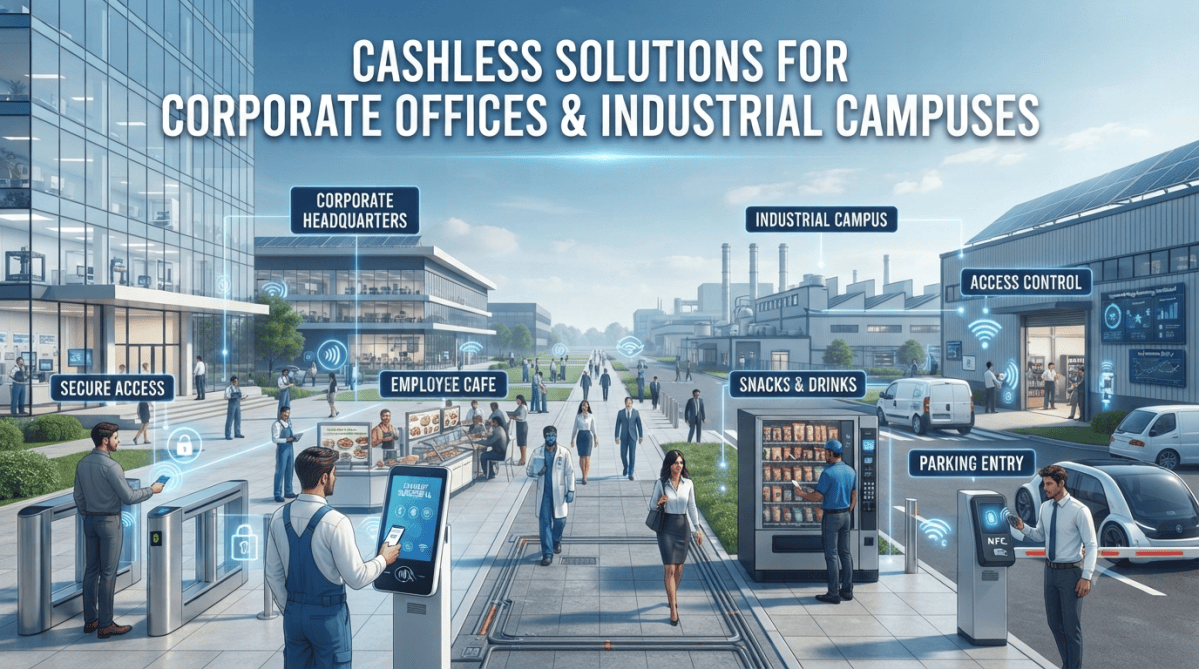
Corporate Offices
Businesses implement cashless solutions for:
- Employee cafeterias
- Visitor management
- Office vending machines
- Expense management
This reduces administrative work and improves financial control.
Additional Benefits of Cashless Systems
Apart from helping cashless systems prevent fraud, organizations also gain:
- Faster payment processing
- Reduced operational costs
- Better customer experience
- Contactless payments
- Improved financial reporting
- Higher operational efficiency
- Easy integration with ERP and accounting software
- Secure cloud-based data storage
Best Practices for Implementing Cashless Systems
To maximize security and transparency:
- Choose a reliable payment platform.
- Enable role-based access controls.
- Use encrypted payment gateways.
- Perform regular software updates.
- Train staff on digital payment procedures.
- Monitor transactions using analytics.
- Back up financial data regularly.
These practices ensure long-term reliability and fraud prevention.
Future of Cashless Payment Systems
The future of cashless payments includes:
- AI-powered fraud detection
- Biometric authentication
- Blockchain transaction security
- Contactless payment expansion
- Cloud-based financial management
- Real-time analytics and reporting
Organizations adopting these technologies will enjoy stronger security and greater financial transparency.
Conclusion
As organizations continue their digital transformation, adopting secure payment technologies has become essential. Cashless systems prevent fraud by eliminating cash handling, creating secure audit trails, reducing human errors, and providing real-time financial visibility.
Whether you manage a school, NGO, healthcare facility, or business, implementing a cashless payment solution improves transparency, strengthens accountability, and builds trust among stakeholders. Investing in a reliable cashless system is not just a technological upgrade—it is a smart step toward safer, more efficient, and transparent financial management.
FAQ
1. How do cashless systems prevent fraud?
Cashless systems prevent fraud by recording every transaction digitally, eliminating cash handling, and providing secure authentication with complete audit trails.
2. Why are cashless systems more transparent?
Every payment is automatically logged, allowing organizations to track transactions, generate reports, and monitor finances in real time.
3. Which industries benefit most from cashless systems?
Schools, colleges, NGOs, hospitals, corporate offices, retail businesses, and government institutions all benefit from improved security and transparency.
4. Can cashless systems reduce accounting errors?
Yes. Automated payment processing minimizes manual data entry, reducing calculation mistakes, duplicate entries, and reconciliation issues.
5. Are cashless payment systems secure?
Yes. Modern cashless systems use encryption, secure authentication, RFID/NFC technology, biometrics, and audit logs to protect financial transactions.
Need help with Cashless solution? BSD Infotech supplies the hardware, builds the software and integrates both.
Request a Quote