How Cashless Solutions Improve Financial Reporting
Contents
- What Are Cashless Solutions?
- 1. Accurate Transaction Records
- 2. Reduces Manual Data Entry
- 3. Faster Financial Reconciliation
- 4. Real-Time Transaction Visibility
- 5. Better Expense Tracking
- 6. Improved Reporting and Analytics
- 7. Easier Audit and Record Management
- 8. Reduces Cash Handling
- 9. Supports Better Decision-Making
- 10. Integration with Business Systems
- Cashless Solutions for Modern Businesses
- Conclusion
In today’s fast-moving business environment, accurate and timely financial reporting is essential for making better decisions. Traditional cash-based transactions often require manual recording, reconciliation, and verification, which can increase the risk of errors and delays. Cashless solutions help businesses digitize transactions and create a more organized flow of financial data.
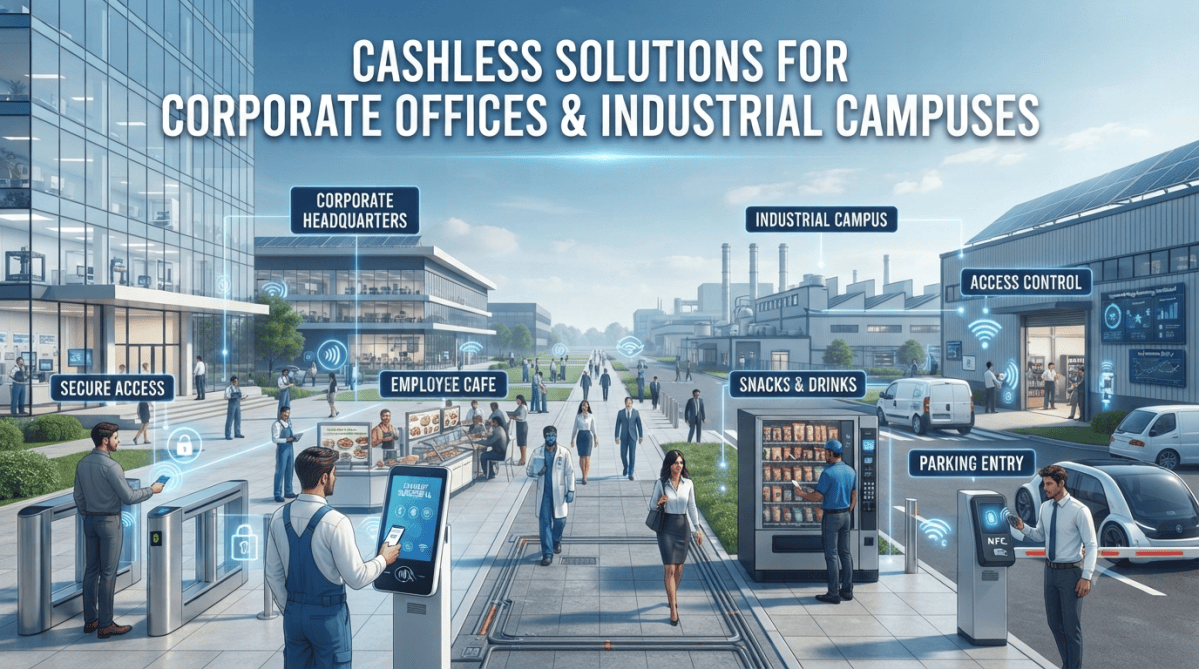
From corporate offices and industrial campuses to canteens, cafeterias, retail outlets, and institutional facilities, cashless payment systems can make transaction management more efficient while providing useful data for financial reporting.
What Are Cashless Solutions?
Cashless solutions allow customers and employees to make payments without using physical cash. Depending on the business environment, these solutions may include:
- RFID cards and readers
- Smart cards
- Contactless payment systems
- QR-code payments
- Digital wallets
- Mobile-based payments
- POS terminals
- Biometric-based payment systems
Each transaction can be digitally recorded, creating a structured record that can be used for monitoring and reporting.
1. Accurate Transaction Records
One of the biggest advantages of cashless systems is automatic transaction recording. Instead of relying on handwritten receipts or manual registers, every successful transaction can be stored digitally.
This helps businesses maintain records such as:
- Transaction date and time
- Transaction amount
- Payment method
- Customer or employee information, where applicable
- Product or service purchased
- Transaction status
Having organized transaction records makes it easier to prepare financial reports and review business activity.
2. Reduces Manual Data Entry
Manual data entry can take considerable time and may result in incorrect amounts, duplicate entries, or missing transactions.
Cashless payment systems can automatically capture transaction information at the point of payment. This reduces the amount of manual work required by finance and administrative teams.
With fewer manual entries, businesses can spend more time analyzing financial information instead of collecting and correcting data.
3. Faster Financial Reconciliation
Reconciliation involves comparing transaction records with payment records to ensure that the reported figures are accurate.
With cashless transactions, digital records can make reconciliation easier because transaction information is available in a structured format.
For example, a company can compare:
Total Transactions → Payment Records → Settlement Amount → Financial Report
This helps finance teams identify discrepancies more quickly and maintain better control over financial data.
4. Real-Time Transaction Visibility
Cashless systems can provide businesses with faster access to transaction information. Depending on the system and integration, managers may be able to monitor sales and payment activity through dashboards or reports.
This can help management understand:
- Daily sales
- Transaction volume
- Payment activity
- Peak transaction periods
- Department-wise spending
- Product-wise sales
Access to timely information supports faster financial analysis and operational decision-making.
5. Better Expense Tracking
Cashless systems can also improve expense monitoring in controlled environments such as corporate cafeterias, employee canteens, and industrial campuses.
For example, an organization can use employee cards or digital accounts to track authorized purchases. This creates a clear digital record of spending.
Businesses can use these records to understand spending patterns and prepare more organized expense reports.
6. Improved Reporting and Analytics
Digital transaction data can be converted into useful reports. Instead of maintaining separate manual records, businesses can analyze transaction information through centralized systems.
Common reports may include:
- Daily transaction reports
- Monthly sales reports
- Payment-method reports
- Department-wise reports
- Product-wise sales reports
- Employee spending reports
- Revenue summaries
These reports can help management identify trends and monitor financial performance.
7. Easier Audit and Record Management
Financial audits require businesses to provide accurate transaction information and supporting records.
Cashless systems create digital transaction trails that can make it easier to locate and verify individual transactions. This can simplify record management and reduce dependence on physical paperwork.
A well-maintained digital transaction history can also support internal controls and financial review processes.
8. Reduces Cash Handling
Managing physical cash involves counting, storing, transporting, and reconciling money. These activities require additional administrative effort.
Cashless payments reduce dependence on physical cash and provide digital transaction records. This can help organizations streamline their payment processes while making financial data easier to organize.
9. Supports Better Decision-Making
Financial reporting is not only about recording past transactions. It also helps management make informed business decisions.
Cashless transaction data can provide insights into customer behavior, sales patterns, spending levels, and operational performance.
For example, a canteen manager can analyze transaction data to determine which products are selling more frequently and during which periods demand is highest.
10. Integration with Business Systems
Modern cashless solutions can often work alongside other business technologies, depending on the system configuration.
Integration with POS, accounting, ERP, inventory, or reporting systems can create a more connected flow of information.
For example:
Cashless Payment → POS System → Transaction Database → Accounting/Reporting → Management Dashboard
This reduces information gaps and can help businesses maintain consistent financial records across different departments.
Cashless Solutions for Modern Businesses
Cashless payment technology is becoming increasingly useful for organizations looking to improve transaction management and financial visibility. Whether it is an employee cafeteria, corporate office, educational institution, industrial campus, or retail environment, digital payments can provide structured transaction data while reducing manual processes.
However, the effectiveness of a cashless system depends on factors such as system configuration, data accuracy, security controls, integration capabilities, and proper implementation.
Conclusion
Cashless solutions can play an important role in improving financial reporting by creating accurate digital transaction records, reducing manual data entry, simplifying reconciliation, and providing faster access to financial information.
By connecting payment systems with POS, accounting, inventory, and reporting platforms, businesses can build a more organized financial data environment. As organizations continue to adopt digital operations, cashless solutions can become an important part of efficient and data-driven financial management.
A well-designed cashless system does more than replace physical cash—it can help transform everyday transactions into useful financial information.
Need help with Cashless solution? BSD Infotech supplies the hardware, builds the software and integrates both.
Request a Quote