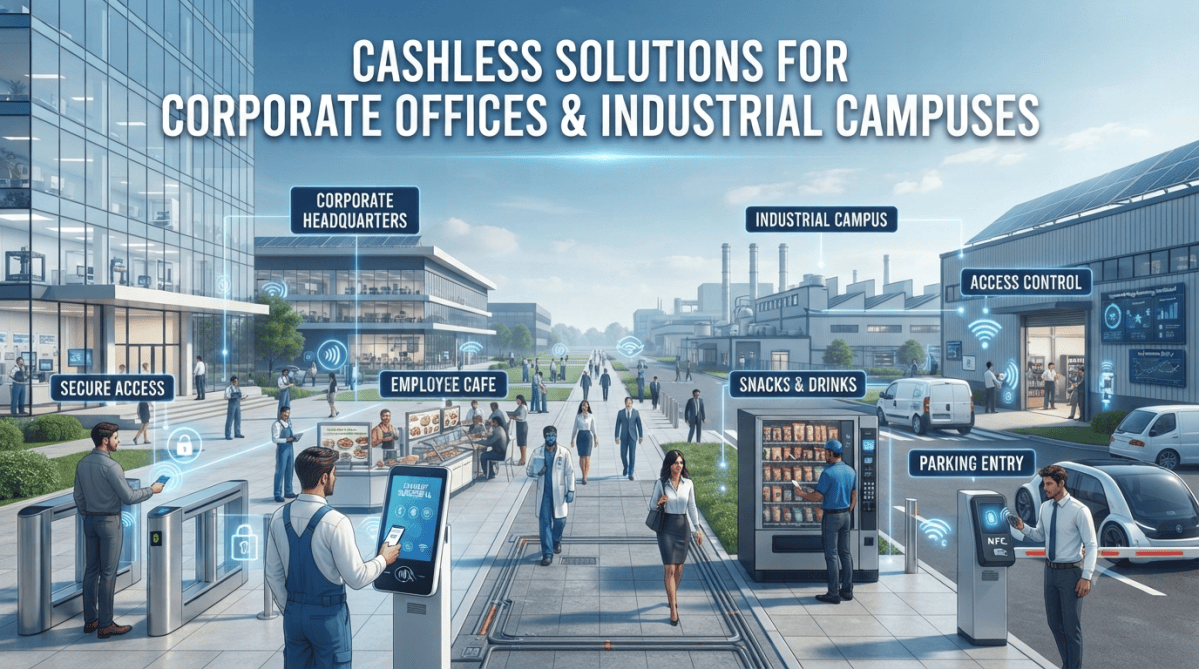
Cashless Ecosystem for Events and Canteens: The Future of Digital Payments
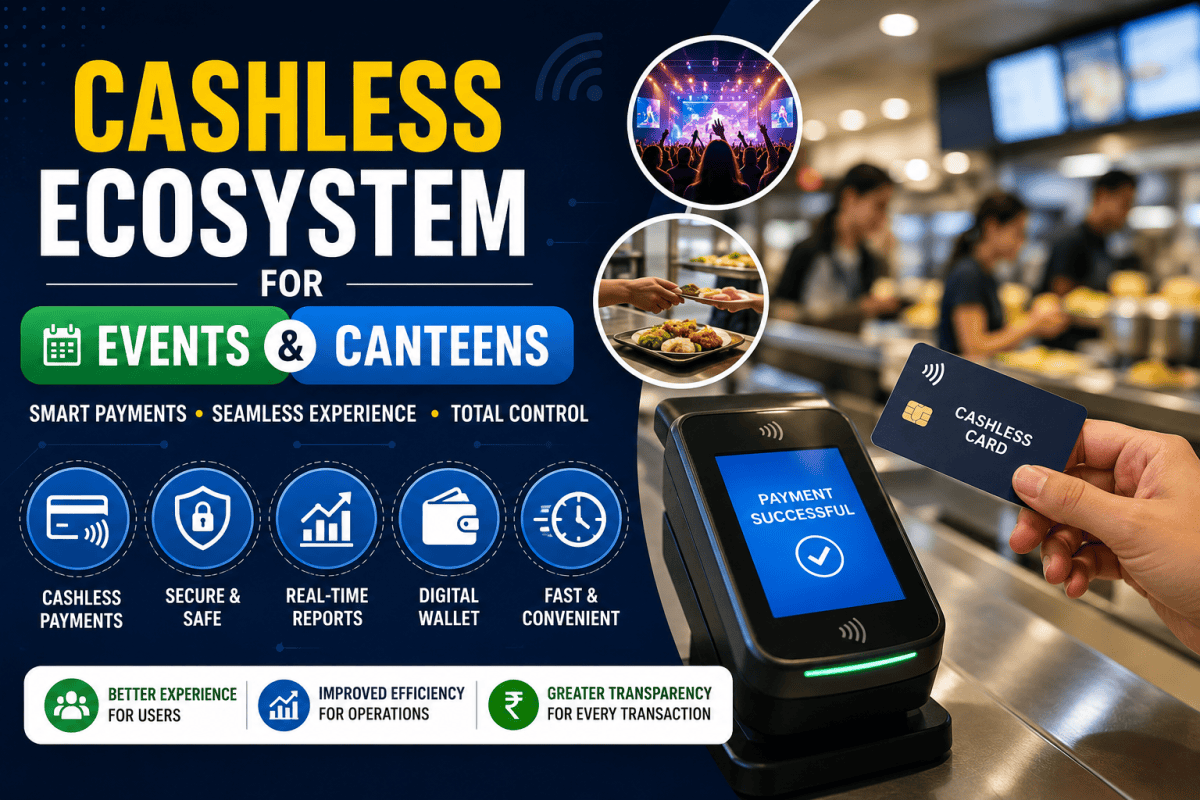
Contents
- What is a Cashless Ecosystem for Events and Canteens?
- Why Traditional Cash Management Creates Challenges
- How a Cashless Ecosystem Works
- Key Features of a Cashless Ecosystem
- RFID Smart Card Payments
- NFC Payment Support
- QR Code Payments
- Digital Wallet Management
- Biometric Authentication
- Online Recharge Portal
- Offline Payment Capability
- Real-Time Transaction Monitoring
- Vendor Management
- Inventory Integration
- Centralized Dashboard
- Multi-Location Support
- Comprehensive Reports
- Benefits of a Cashless Ecosystem for Events and Canteens
- Faster Service
- Reduced Waiting Lines
- Improved Customer Experience
- Better Financial Transparency
- Enhanced Security
- Lower Operational Costs
- Accurate Inventory Management
- Easy Vendor Settlement
- Improved Decision Making
- Better User Management
- Scalable Infrastructure
- Applications of Cashless Ecosystems
- Educational Institutions
- Corporate Offices
- Industrial Canteens
- Hospitals
- Clubs and Recreational Centers
- Sports Stadiums
- Music Festivals
- Conferences and Exhibitions
- Resorts and Hotels
- Technologies Used in Cashless Ecosystems
- Security Features
- Reports Generated by the System
- Best Practices for Successful Implementation
- Future Trends in Cashless Payment Systems
- Why Businesses Should Adopt a Cashless Ecosystem
- Conclusion
In today’s fast-paced world, speed, convenience, and security have become essential in managing food services and event operations. Traditional cash transactions often lead to long queues, accounting errors, cash theft, and delayed service, negatively affecting both customers and administrators. Whether it’s a university canteen, corporate cafeteria, music festival, conference, exhibition, sports stadium, or industrial dining facility, handling thousands of transactions manually is time-consuming and inefficient.
A Cashless Ecosystem for Events and Canteens transforms the payment experience by replacing cash with secure digital payment methods such as RFID cards, NFC cards, QR codes, prepaid wallets, biometric authentication, and mobile payment applications. This modern solution ensures quick transactions, transparent accounting, real-time reporting, and seamless user management while improving operational efficiency.
As organizations continue embracing digital transformation, implementing a cashless ecosystem has become an effective way to simplify payment processes, enhance customer satisfaction, and reduce operational costs.
What is a Cashless Ecosystem for Events and Canteens?
A cashless ecosystem is a comprehensive digital payment platform designed to eliminate physical cash transactions within a controlled environment. Instead of paying with cash, users utilize smart technologies like RFID cards, NFC-enabled devices, QR codes, mobile wallets, or biometric verification to complete purchases instantly.
The system records every transaction in real time, updates wallet balances automatically, and provides administrators with complete visibility into sales, inventory, user spending, and financial performance.
Unlike standalone payment systems, a cashless ecosystem integrates multiple operational modules, including payment processing, inventory management, user administration, vendor management, reporting, and analytics, into a single centralized platform.
Why Traditional Cash Management Creates Challenges
Managing cash at canteens and events presents several operational difficulties.
Common challenges include:
- Long waiting lines during peak hours
- Slow payment processing
- Cash theft and fraud
- Manual billing errors
- Difficult cash reconciliation
- High administrative workload
- Inventory mismatches
- Limited financial transparency
- Vendor settlement complexities
- Poor customer experience
These issues become even more significant during large events where thousands of visitors make purchases within a short period.
A cashless ecosystem effectively addresses these challenges through automation and digital payment technologies.
How a Cashless Ecosystem Works
The payment process is designed to be simple and user-friendly.
Step 1: User Registration
Visitors, employees, or students are registered in the system and receive an RFID card, NFC card, QR code, or digital wallet account.
Step 2: Wallet Recharge
Users recharge their digital wallets through multiple payment options including:
- UPI
- Net Banking
- Credit Cards
- Debit Cards
- Cash Counter
- Payment Gateway
Step 3: Product Selection
Customers choose food items or event services from participating vendors.
Step 4: Contactless Payment
The customer taps an RFID card, scans a QR code, uses NFC, or verifies identity through biometrics.
The transaction is completed within seconds.
Step 5: Instant Balance Update
The system automatically deducts the payment amount and updates the wallet balance.
Step 6: Real-Time Reporting
Administrators can instantly monitor:
- Sales
- Revenue
- Inventory
- User activity
- Vendor collections
- Recharge history
Key Features of a Cashless Ecosystem
RFID Smart Card Payments
RFID technology enables quick contactless transactions with a simple tap, reducing waiting time and improving operational efficiency.
NFC Payment Support
Near Field Communication (NFC) allows users to make secure payments using compatible cards or mobile devices.
QR Code Payments
Customers can scan dynamic or static QR codes using UPI-enabled payment apps for fast and convenient transactions.
Digital Wallet Management
Each user receives a prepaid wallet linked to their profile. Wallet balances can be recharged online or at designated recharge counters.
Biometric Authentication
Fingerprint authentication ensures that only authorized users can access their accounts, reducing fraud and unauthorized usage.
Online Recharge Portal
Users can conveniently recharge their accounts anytime using multiple payment methods.
Offline Payment Capability
Even during temporary internet outages, offline transaction support ensures uninterrupted service.
Real-Time Transaction Monitoring
Every payment is automatically recorded and synchronized with the central database, providing administrators with complete transaction visibility.
Vendor Management
The system allows administrators to manage multiple vendors operating within the same ecosystem while maintaining separate sales records.
Inventory Integration
Food inventory automatically updates after every transaction, minimizing manual stock management.
Centralized Dashboard
Administrators can monitor all operational activities from one centralized dashboard.
Multi-Location Support
A single wallet or RFID card can be used across:
- Cafeterias
- Food Courts
- Campus Stores
- Event Stalls
- Coffee Shops
- Vending Machines
Comprehensive Reports
The system generates reports such as:
- Daily Sales Reports
- Collection Reports
- Vendor Reports
- User Recharge Reports
- Transaction Reports
- Inventory Reports
- Tax Reports
- Financial Statements
Benefits of a Cashless Ecosystem for Events and Canteens
Faster Service
Contactless transactions significantly reduce payment time, allowing vendors to serve more customers without increasing staffing.
Reduced Waiting Lines
Quick digital payments minimize congestion during lunch hours and large public events.
Improved Customer Experience
Visitors enjoy smooth, hassle-free payments without worrying about carrying cash or waiting for change.
Better Financial Transparency
Every transaction is digitally recorded, making audits and financial reconciliation easier and more accurate.
Enhanced Security
Removing physical cash reduces theft, counterfeit currency risks, and unauthorized financial activities.
Lower Operational Costs
Automation reduces paperwork, manual accounting, and administrative effort.
Accurate Inventory Management
Every sale automatically updates inventory records, reducing wastage and improving stock planning.
Easy Vendor Settlement
Separate vendor-wise transaction tracking simplifies revenue sharing and payment settlement.
Improved Decision Making
Real-time dashboards and analytics help administrators make informed operational decisions.
Better User Management
Administrators can issue, replace, block, suspend, or recharge user accounts with ease.
Scalable Infrastructure
The solution can easily support thousands of users across multiple locations without compromising performance.
Applications of Cashless Ecosystems
Cashless payment systems are suitable for a wide range of industries and institutions.
Educational Institutions
Schools, colleges, universities, and hostels can simplify cafeteria payments while improving financial control.
Corporate Offices
Organizations can provide employees with prepaid meal wallets and cashless cafeteria access.
Industrial Canteens
Factories and manufacturing units benefit from quick employee meal transactions and automated reporting.
Hospitals
Hospitals can manage staff cafeterias, visitor food courts, and patient meal services efficiently.
Clubs and Recreational Centers
Members can enjoy seamless cashless payments for dining, sports, and recreational facilities.
Sports Stadiums
Large crowds can make quick purchases without creating long queues.
Music Festivals
Event organizers can eliminate cash handling while improving visitor convenience.
Conferences and Exhibitions
Attendees can purchase food, beverages, and merchandise through one integrated payment system.
Resorts and Hotels
Guests can use one digital wallet throughout the property for restaurants, cafés, and recreational facilities.
Technologies Used in Cashless Ecosystems
Modern cashless ecosystems combine several advanced technologies, including:
- RFID Technology
- NFC Technology
- QR Code Payments
- Cloud Computing
- Mobile Applications
- Payment Gateway Integration
- UPI Integration
- Artificial Intelligence
- Data Analytics
- Biometric Authentication
- Secure Database Management
- API Integrations
Security Features
Security is one of the strongest advantages of digital payment ecosystems.
Key security features include:
- Secure Login Authentication
- Role-Based Access Control
- Encrypted Transactions
- Audit Logs
- Data Backup
- Fraud Detection
- Lost Card Blocking
- Real-Time Monitoring
- Secure Cloud Hosting
- Multi-Level User Permissions
Reports Generated by the System
Administrators can generate detailed reports including:
- Daily Collection Report
- Wallet Recharge Report
- User Balance Report
- Vendor Collection Report
- Meal Consumption Report
- Product Sales Report
- GST Reports
- Inventory Stock Report
- Transaction History
- Financial Summary Report
- User Activity Report
- Monthly Revenue Report
Best Practices for Successful Implementation
To maximize the benefits of a cashless ecosystem, organizations should:
- Train staff and vendors before deployment.
- Educate users on wallet recharge and payment methods.
- Regularly monitor transaction reports.
- Ensure reliable internet connectivity or offline backup.
- Conduct periodic security audits.
- Keep software updated with the latest features.
- Integrate inventory and accounting systems.
- Maintain secure user authentication policies.
Future Trends in Cashless Payment Systems
Digital payment technology continues to evolve rapidly. Future cashless ecosystems are expected to include:
- AI-powered spending analytics
- Facial recognition payments
- Voice-enabled transactions
- IoT-enabled vending machines
- Blockchain-based payment security
- Smart wearable payment devices
- Predictive inventory management
- Advanced fraud detection using machine learning
- Fully cloud-based ecosystem management
These innovations will further improve speed, security, and operational efficiency.
Why Businesses Should Adopt a Cashless Ecosystem
Organizations implementing cashless payment systems experience numerous long-term advantages, including improved customer satisfaction, better financial transparency, faster operations, reduced cash handling, lower administrative costs, and more accurate reporting.
A cashless ecosystem also provides valuable business insights through data analytics, enabling organizations to optimize inventory, understand customer purchasing behavior, and make data-driven decisions.
As digital payments become increasingly popular, adopting a cashless ecosystem is no longer a luxury—it is a strategic investment that enhances operational excellence and supports sustainable growth.
Conclusion
A Cashless Ecosystem for Events and Canteens is a modern solution that transforms traditional payment processes into fast, secure, and transparent digital transactions. By integrating technologies such as RFID, NFC, QR codes, mobile wallets, and biometric authentication, organizations can eliminate cash handling, reduce operational challenges, and significantly improve customer experiences.
Whether you’re managing a university cafeteria, corporate canteen, hospital dining facility, industrial food court, sports arena, or large-scale event, a cashless ecosystem offers the flexibility, scalability, and efficiency required to meet today’s digital expectations. Investing in a robust cashless solution helps organizations streamline operations, gain real-time financial insights, and build a smarter, more connected future.
Need help with Cashless solution? BSD Infotech supplies the hardware, builds the software and integrates both.
Request a Quote