
Biometrics Devices: Secure Authentication and Identification Solutions for Modern Businesses
Contents
- What Are Biometric Devices
- Key Applications of Biometrics
- Windows Compatibility
- Software Integration Capabilities
- USB Connectivity for Easy Deployment
- Suitable for Offices, Schools, and Institutions
- Driver Installation and Setup
- Enhanced Security Performance
- Fast and Reliable Operation
- Durability for Long-Term Use
- Customization for Business Requirements
- Conclusion
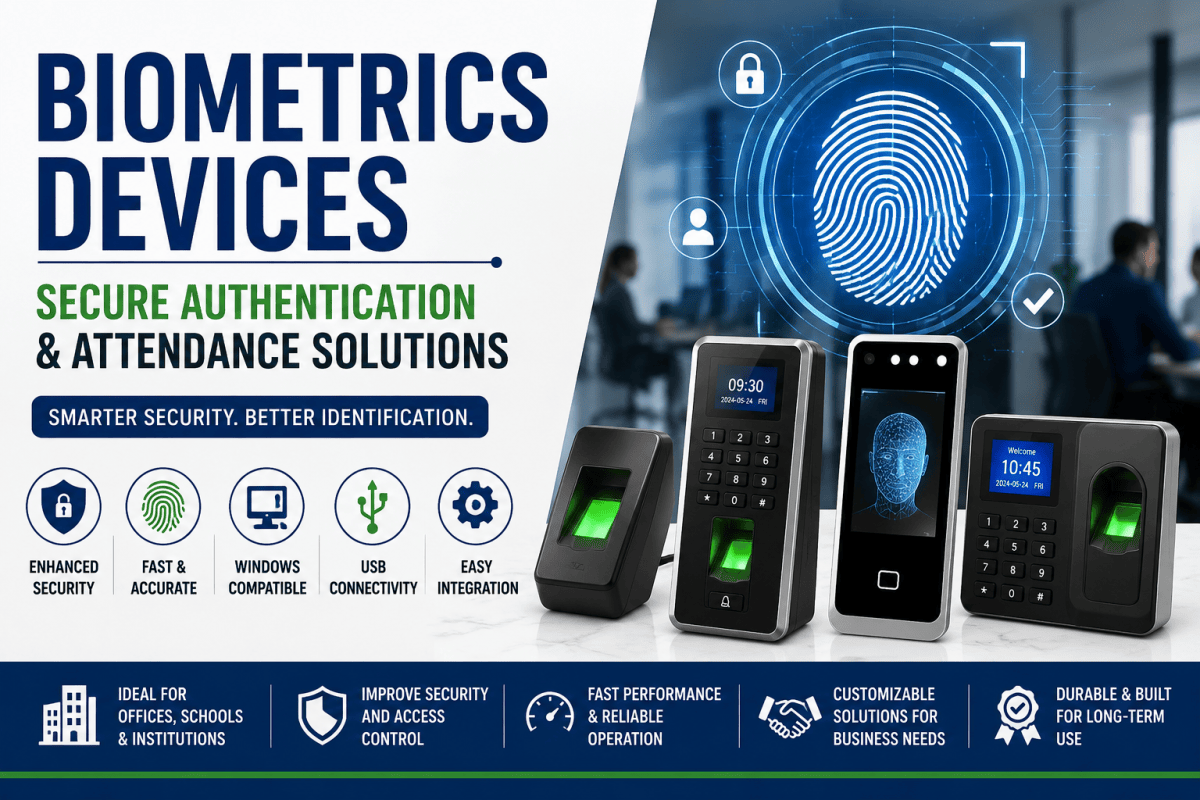
Biometric technology has become an essential part of modern security and attendance management systems. From offices and educational institutions to government organizations and industrial facilities, biometric devices provide a reliable and secure way to verify identities. These solutions use unique physical characteristics such as fingerprints, facial features, or iris patterns to ensure accurate authentication and access control.
What Are Biometric Devices
Biometric devices are electronic systems designed to identify and authenticate individuals using their unique biological traits. Unlike traditional passwords or ID cards, biometric authentication offers enhanced security because biometric data cannot be easily duplicated or shared.
These devices are widely used for employee attendance tracking, access control, visitor management, time monitoring, and secure authentication applications.
Key Applications of Biometrics
1. Authentication and Security
Biometric systems provide an advanced layer of security by verifying an individual’s identity before granting access to sensitive areas, systems, or information. This helps prevent unauthorized access and reduces security risks.
2. Attendance Management
Organizations use biometric attendance systems to accurately record employee attendance and eliminate proxy attendance issues. Fingerprint and facial recognition devices ensure precise and automated attendance tracking.
3. Identification Systems
Biometric devices are widely used for identity verification in government projects, educational institutions, healthcare facilities, and corporate environments.
Windows Compatibility
Most biometric devices are fully compatible with Windows operating systems. This compatibility allows businesses to easily integrate biometric hardware with their existing computers and management software without requiring significant infrastructure changes.
Software Integration Capabilities
Modern biometric devices often come with SDK (Software Development Kit) and API support. This enables developers and organizations to integrate biometric authentication into custom applications, HR systems, attendance software, access control platforms, and enterprise security solutions.
Benefits of software integration include:
- Automated attendance processing
- Enhanced access management
- Employee database synchronization
- Real-time authentication
- Customized reporting and analytics
USB Connectivity for Easy Deployment
Most biometric devices utilize USB connectivity, making installation simple and convenient. USB-enabled biometric readers can be connected directly to desktop computers, laptops, kiosks, and other compatible systems without requiring complex networking configurations.
Suitable for Offices, Schools, and Institutions
Biometric solutions are highly versatile and can be deployed across various sectors, including:
- Corporate offices
- Educational institutions
- Government departments
- Healthcare facilities
- Manufacturing units
- Financial organizations
- Retail businesses
Their flexibility makes them an ideal choice for organizations seeking reliable identification and attendance management solutions.
Driver Installation and Setup
For proper operation, biometric devices may require driver installation. Drivers help establish communication between the biometric hardware and the operating system. Most manufacturers provide easy-to-install drivers and setup guides to ensure smooth deployment and configuration.
Enhanced Security Performance
One of the biggest advantages of biometric technology is its ability to strengthen security systems. Since biometric traits are unique to each individual, they provide a higher level of authentication compared to traditional passwords, PINs, or access cards.
Organizations benefit from:
- Reduced identity fraud
- Improved access control
- Better compliance with security policies
- Enhanced protection of sensitive information
Fast and Reliable Operation
Modern biometric devices are engineered for quick recognition and verification. Advanced algorithms enable rapid authentication while maintaining high accuracy levels. This helps minimize waiting times and improves operational efficiency in busy environments.
Durability for Long-Term Use
Biometric hardware is designed to withstand regular and continuous usage. High-quality sensors and robust construction ensure dependable performance even in demanding environments, making biometric devices a cost-effective long-term investment.
Customization for Business Requirements
Many biometric solutions can be customized according to organizational needs. Through software integration and configurable settings, businesses can implement tailored authentication workflows, attendance policies, access rules, and reporting systems that align with their operational requirements.
Conclusion
Biometric devices have transformed the way organizations manage security, authentication, and attendance. With Windows compatibility, USB connectivity, software integration capabilities, fast performance, and long-term durability, biometric solutions offer an efficient and secure approach to identity verification. Whether used in offices, schools, institutions, or industrial facilities, biometric technology continues to deliver reliable and scalable security solutions for modern businesses.
Need help with Biometrics Devices? BSD Infotech supplies the hardware, builds the software and integrates both.
Request a Quote