Attendance Management: A Complete Guide to Streamline Workforce Tracking
Contents
- What is Attendance Management?
- Why is Attendance Management Important?
- 1. Improves Payroll Accuracy
- 2. Increases Employee Accountability
- 3. Reduces Time Theft
- 4. Enhances Productivity
- 5. Simplifies Leave Management
- 6. Ensures Legal Compliance
- Common Challenges in Attendance Management
- Features of an Attendance Management System
- Employee Check-In and Check-Out
- Real-Time Attendance Monitoring
- Leave Management
- Shift Management
- Overtime Tracking
- Payroll Integration
- Reporting and Analytics
- Types of Attendance Management Systems
- Manual Attendance
- Biometric Attendance System
- Face Recognition Attendance
- RFID Attendance System
- Mobile Attendance System
- Cloud-Based Attendance System
- Benefits of Attendance Management Software
- Best Practices for Effective Attendance Management
- Industries That Benefit from Attendance Management
- How to Choose the Right Attendance Management System
- Future Trends in Attendance Management
- Conclusion
Attendance management is the process of tracking, recording, and monitoring employee attendance, working hours, leave, shifts, and overtime. It plays a vital role in improving workforce productivity, ensuring payroll accuracy, and maintaining compliance with labor regulations.
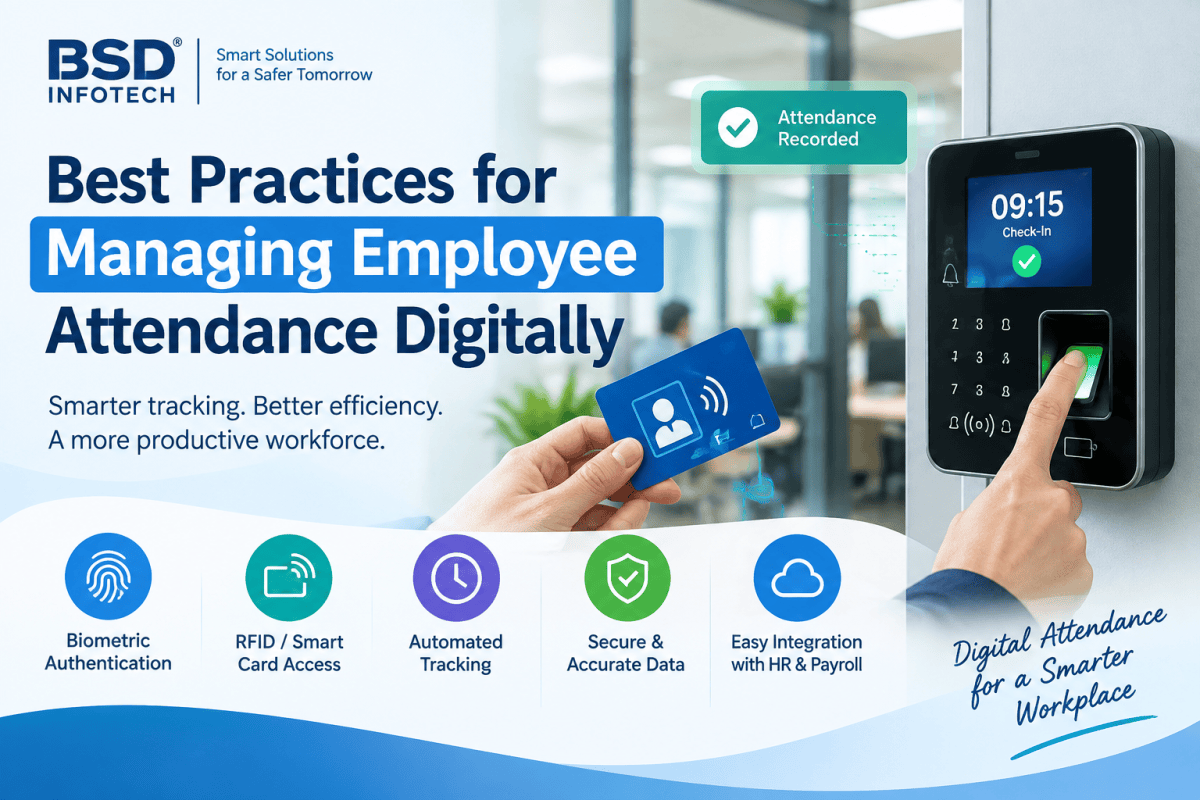
Traditional attendance methods, such as paper registers and manual spreadsheets, are time-consuming and prone to errors. Modern attendance management systems automate the entire process using biometric devices, RFID cards, facial recognition, mobile applications, and cloud-based software.
In today’s competitive business environment, an efficient attendance management system helps organizations save time, reduce administrative work, eliminate attendance fraud, and improve employee accountability.
What is Attendance Management?
Attendance management refers to the systematic process of monitoring employees’ working hours, attendance status, leaves, holidays, late arrivals, early departures, and overtime.
The primary objective is to ensure employees are present during scheduled working hours while maintaining accurate attendance records for payroll and performance evaluation.
An attendance management system provides real-time visibility into workforce attendance, helping HR departments make informed decisions and improve operational efficiency.
Why is Attendance Management Important?
An effective attendance management system offers numerous benefits for organizations of all sizes.
1. Improves Payroll Accuracy
Automated attendance records ensure employees are paid accurately based on actual working hours, reducing payroll errors and disputes.
2. Increases Employee Accountability
When attendance is tracked digitally, employees become more responsible for punctuality and regular attendance.
3. Reduces Time Theft
Biometric authentication and facial recognition prevent buddy punching and unauthorized attendance marking.
4. Enhances Productivity
Managers can identify attendance patterns, absenteeism trends, and staffing shortages to improve workforce planning.
5. Simplifies Leave Management
Employees can apply for leave online, while managers can approve or reject requests instantly.
6. Ensures Legal Compliance
Accurate attendance records help organizations comply with labor laws, audit requirements, and government regulations.
Common Challenges in Attendance Management
Many organizations struggle with attendance tracking due to manual processes.
Common challenges include:
- Manual attendance errors
- Buddy punching
- Late arrivals
- Frequent absenteeism
- Shift scheduling conflicts
- Payroll inaccuracies
- Overtime calculation mistakes
- Remote employee tracking
- Multiple office location management
- Time-consuming HR processes
Modern attendance management software addresses these challenges through automation.
Features of an Attendance Management System
A comprehensive attendance management solution typically includes:
Employee Check-In and Check-Out
Employees can mark attendance using:
- Biometric fingerprint scanners
- Face recognition devices
- RFID smart cards
- Mobile applications
- GPS-based attendance
- QR code scanning
Real-Time Attendance Monitoring
HR managers can monitor:
- Present employees
- Absent employees
- Late arrivals
- Early departures
- Shift attendance
- Remote workforce attendance
Leave Management
Employees can:
- Apply for leave online
- Track leave balances
- View leave history
- Receive approval notifications
Managers can:
- Approve leave requests
- Reject applications
- Monitor department leave calendars
Shift Management
Attendance systems support:
- Fixed shifts
- Rotational shifts
- Night shifts
- Flexible work schedules
- Weekend shifts
Overtime Tracking
The system automatically calculates:
- Overtime hours
- Weekend work
- Holiday work
- Double-time pay
- Compensatory offs
Payroll Integration
Attendance data integrates directly with payroll software, ensuring:
- Accurate salary calculation
- Leave deduction
- Overtime payment
- Tax calculation
- Attendance incentives
Reporting and Analytics
HR teams can generate reports such as:
- Daily attendance reports
- Monthly attendance reports
- Employee absenteeism reports
- Late arrival reports
- Overtime reports
- Department-wise attendance reports
Types of Attendance Management Systems
Manual Attendance
Employees sign attendance registers.
Advantages
- Low cost
- Easy to implement
Disadvantages
- Error-prone
- Time-consuming
- Difficult to manage
Biometric Attendance System
Uses fingerprint or iris recognition.
Advantages
- High accuracy
- Prevents buddy punching
- Fast verification
Face Recognition Attendance
Employees verify identity using facial recognition.
Benefits
- Contactless
- Highly secure
- Quick authentication
- Suitable for modern workplaces
RFID Attendance System
Employees use RFID smart cards to record attendance.
Ideal for
- Offices
- Schools
- Colleges
- Manufacturing units
Mobile Attendance System
Employees check in using a smartphone.
Features include:
- GPS tracking
- Geo-fencing
- Selfie verification
- Remote attendance
- Field workforce management
Cloud-Based Attendance System
Attendance data is stored securely in the cloud.
Benefits include:
- Access from anywhere
- Automatic backups
- Multi-location support
- Real-time synchronization
- Easy scalability
Benefits of Attendance Management Software
Organizations using automated attendance software experience:
- Reduced administrative workload
- Accurate payroll processing
- Improved employee discipline
- Better workforce planning
- Increased transparency
- Lower operational costs
- Enhanced productivity
- Faster HR processes
- Improved compliance
- Better employee satisfaction
Best Practices for Effective Attendance Management
To maximize the benefits of an attendance management system:
- Establish a clear attendance policy.
- Communicate attendance rules to all employees.
- Automate attendance tracking whenever possible.
- Integrate attendance with payroll and HR systems.
- Monitor attendance trends regularly.
- Generate periodic attendance reports.
- Encourage punctuality through positive reinforcement.
- Conduct regular system audits to ensure data accuracy.
Industries That Benefit from Attendance Management
Attendance management solutions are widely used across:
- Corporate Offices
- Manufacturing
- Healthcare
- Educational Institutions
- Government Organizations
- Retail
- Hospitality
- IT Companies
- Warehouses
- Logistics
- Construction
- Banking and Financial Services
How to Choose the Right Attendance Management System
Before selecting a solution, consider:
- Organization size
- Number of employees
- Biometric or facial recognition support
- Mobile attendance features
- Cloud accessibility
- Payroll integration
- Shift scheduling capabilities
- Reporting and analytics
- Ease of use
- Data security
- Customer support
- Scalability
Future Trends in Attendance Management
Attendance management is evolving with advanced technologies, including:
- AI-powered attendance analytics
- Facial recognition with liveness detection
- Touchless biometric authentication
- Mobile-first attendance systems
- Cloud-native HR platforms
- Predictive workforce analytics
- Integration with IoT devices
- Voice-enabled attendance solutions
These innovations help organizations create smarter, more efficient workforce management processes.
Conclusion
Attendance management is no longer just about recording employee presence—it is a strategic tool for improving productivity, streamlining HR operations, and ensuring accurate payroll. By adopting a modern attendance management system with features such as biometric authentication, facial recognition, cloud access, and real-time reporting, organizations can reduce administrative effort, enhance compliance, and build a more accountable workforce.
Whether you’re a small business or a large enterprise, investing in the right attendance management solution can lead to greater efficiency, improved employee satisfaction, and long-term organizational success.
Need help with Attendance Management? BSD Infotech supplies the hardware, builds the software and integrates both.
Request a Quote