
Multi-User Permission Management for High-Security Laboratories
Contents
High-security laboratories handle sensitive data, valuable research, hazardous materials, and restricted equipment. Ensuring that only authorized personnel can access specific areas, devices, and information is critical for maintaining security, compliance, and operational integrity. Multi-User Permission Management systems provide a structured approach to controlling and monitoring access within these environments.
What is Multi-User Permission Management?
Multi-User Permission Management is a security framework that allows administrators to assign different levels of access rights to users based on their roles, responsibilities, and authorization levels. Instead of granting universal access, the system ensures that each individual can only access the resources necessary for their work.
This approach follows the principle of least privilege, reducing security risks and preventing unauthorized activities.
Key Features
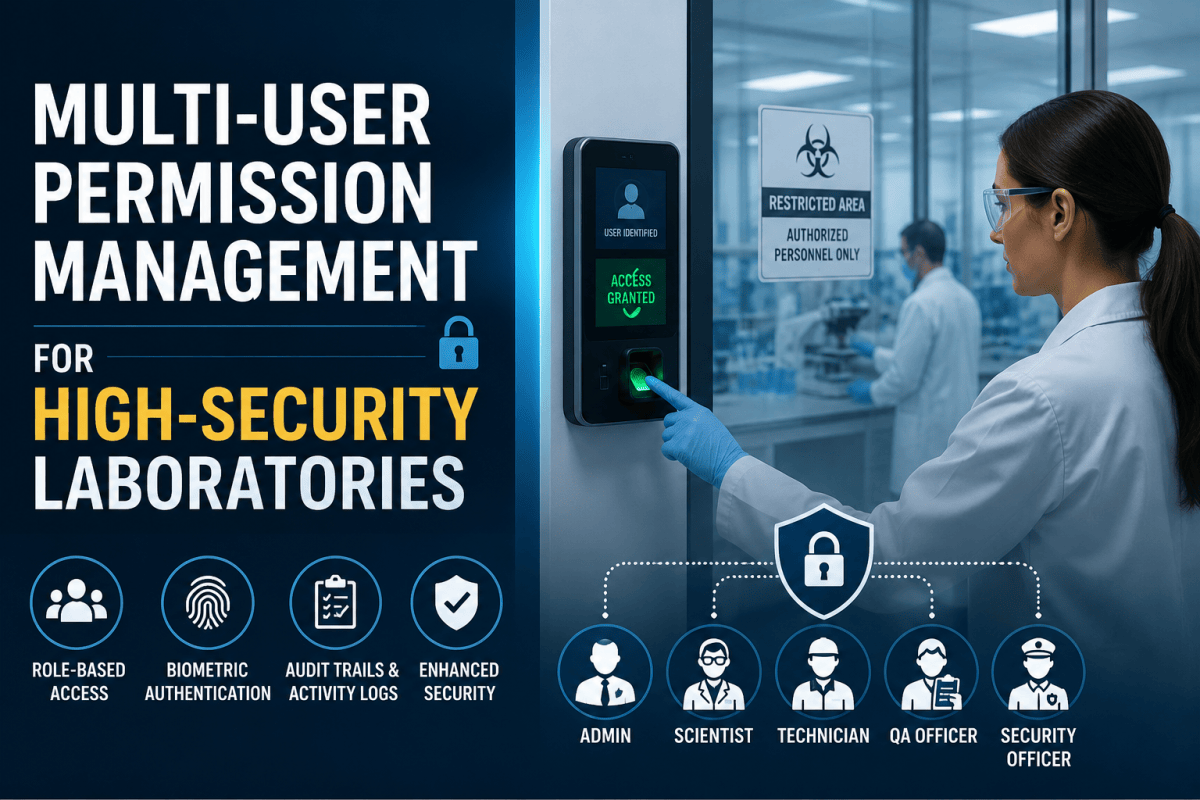
1. Role-Based Access Control (RBAC)
Users are assigned permissions based on predefined roles such as:
- Laboratory Administrator
- Research Scientist
- Technician
- Quality Assurance Personnel
- Security Officer
- Visitor or Contractor
Each role receives access only to relevant facilities, equipment, and data.
2. Biometric Authentication
Fingerprint, facial recognition, or iris scanning technologies help verify user identity before granting access. Biometric authentication eliminates risks associated with lost or shared access cards and passwords.
3. Time-Based Access Restrictions
Access permissions can be configured according to work schedules, ensuring personnel can enter designated areas only during approved time periods.
4. Multi-Level Authorization
Certain sensitive operations may require approval from multiple authorized personnel. This dual-control mechanism enhances security and accountability.
5. Audit Trails and Activity Logs
Every access attempt, successful entry, and permission change is automatically recorded. These logs support regulatory compliance, investigations, and security audits.
Benefits for High-Security Laboratories
Enhanced Security
By restricting access based on user roles, laboratories significantly reduce the risk of unauthorized entry, data breaches, and equipment misuse.
Regulatory Compliance
Many industries, including pharmaceuticals, biotechnology, healthcare, and defense research, must comply with strict security standards. Permission management systems help organizations meet these regulatory requirements.
Improved Accountability
Comprehensive logging ensures that every action can be traced to a specific user, increasing transparency and responsibility.
Operational Efficiency
Automated permission management reduces administrative workload while ensuring seamless access for authorized personnel.
Protection of Sensitive Research
Research data, intellectual property, and confidential experiments remain protected from unauthorized access and potential theft.
Common Applications
Multi-User Permission Management is widely used in:
- Pharmaceutical Research Laboratories
- Biotechnology Facilities
- Government Research Centers
- Defense Laboratories
- Chemical Testing Facilities
- Academic Research Institutions
- Healthcare Diagnostic Laboratories
Integration with Modern Security Systems
Modern permission management solutions can integrate with:
- Biometric Devices
- RFID Access Control Systems
- Smart Card Authentication
- Laboratory Information Management Systems (LIMS)
- CCTV Surveillance Systems
- Visitor Management Platforms
This integration creates a comprehensive security ecosystem that enhances protection and monitoring capabilities.
Conclusion
Multi-User Permission Management plays a vital role in maintaining security within high-security laboratories. By combining role-based access control, biometric authentication, detailed audit logs, and automated authorization processes, organizations can safeguard critical assets, protect sensitive research, and ensure compliance with industry regulations. As laboratories continue to handle increasingly valuable and sensitive information, implementing robust permission management systems becomes essential for long-term operational security and efficiency.
Need help with POS Point of Sale? BSD Infotech supplies the hardware, builds the software and integrates both.
Request a Quote